Japan has more cat cafés than any other country. Our directory lists more than 900 open ones across all 47 prefectures, from a rescue café in a converted double-decker bus in Nagoya to a café for elderly rescue cats on a hillside facing Miyajima. That’s a long way from 2005, when Japan’s Ministry of the Environment counted three cat cafés in the whole country, or from the end of 2015, when it counted about 300. Much of the growth since has come from small rescue cafés, and most of it outside Tokyo.
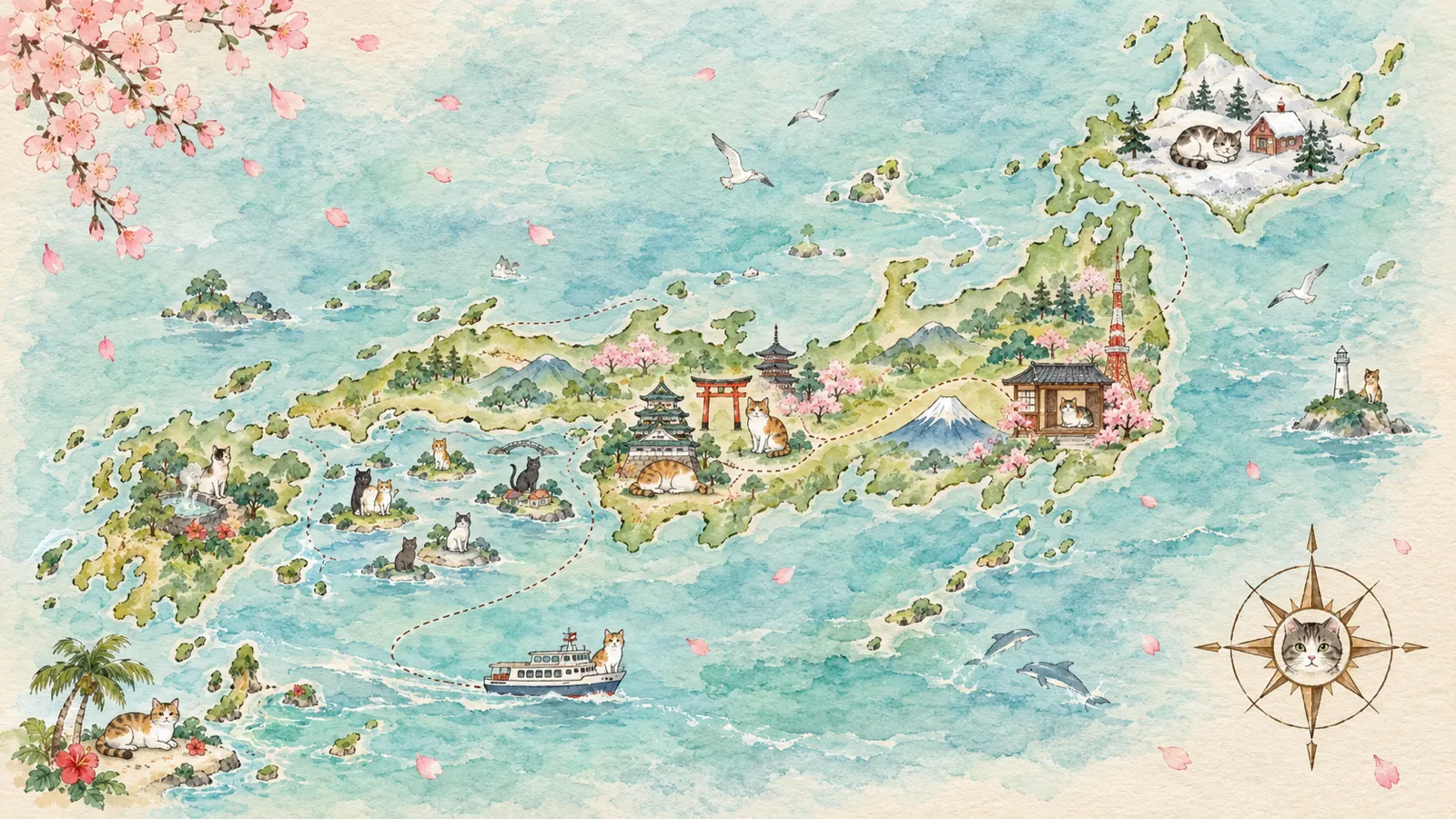
So a trip to Japan doesn’t have to be planned around Tokyo’s cat cafés. Osaka, where the country’s first opened in 2004, has almost as many as the capital, and every big city on the usual route from Tokyo to Hiroshima has a few worth the detour. We start with what to expect inside a Japanese cat café and what it costs, then work along the map city by city, out to Sapporo and Okinawa, and finish with the cat islands. Every price, closing day and age rule below comes from the café’s own website or social accounts as of October 2026. For Tokyo itself, see our neighborhood guide.
How Cat Cafés Work in Japan
Before you pick a café, it helps to know who runs it, because that decides the price, the cats and the rules.
- Chains such as MOCHA, MOFF, Coorikuya and Puchi Marry are found by big stations and in shopping malls. You walk in and pay by the clock, usually ¥1,000 to ¥1,500 for the first 30 minutes and about ¥220 to ¥250 for every extra 10, up to a daily cap, with drinks included. The cats are young purebreds, and several chains belong to pet-shop groups. With no booking and clear prices, they’re the simplest option if you don’t read Japanese.
- Rescue cafés, or hogo-neko cafés (保護猫カフェ), are usually small and run by a non-profit or a single rescuer, and their cats are waiting for adoption. Expect ¥1,000 to ¥2,000 an hour, often with a drink, and a booking through LINE or by phone. Tourists can’t realistically adopt, since rescues ask for local residence, pet-friendly housing, an interview and sometimes a home visit, but your fee goes towards the cats’ food and vet bills.
- Breeder cafés belong to a cat breeder or pet shop, often focus on one breed such as Bengals, Munchkins or Maine Coons, and sometimes sell kittens on site. We point these out below.
House rules vary less than prices. Shoes come off at the door and hands get washed or sanitised. Cats are for stroking, not lifting, unless staff offer, cameras are fine with the flash off, and sleeping cats are left alone. Check the minimum age before bringing children: 6 is common, and some cafés set it at 10 or higher. Small cafés may not take cards, though PayPay and other QR apps are now widely accepted.
Japanese law also shapes the opening hours. Since 2012, pet businesses may not put dogs and cats on display between 8pm and 8am. Cat cafés have a permanent exception, in place since 2016, that lets adult cats aged one and over be shown until 10pm, as long as they can retreat to a resting area. That is why almost no cat café in Japan stays open past 10pm. Since 2021, national standards also cap the number of cats per member of staff and set minimum room sizes.
Japanese Cat Cafés at a Glance
City | Easy walk-in | Rescue café | Something different |
|---|---|---|---|
Tokyo | MOCHA Lounge Shinjuku | Yadorigi Cafe | Temari no Ouchi |
Osaka | MOCHA Shinsaibashi | Save Cat Cafe, Neco Republic | Diorama Shokudo |
Kyoto | MOCHA Kawaramachi | Maneki Machiya | Cat’s Eye |
Nara & Kobe | MOCHA Kobe Sannomiya | Cocone (Nara) | Nyanny (Kobe) |
Yokohama & Kamakura | Nekochan to Issho | Neko Cafe Leon, Miysis | Kamakura Nekonoma |
Nagoya | MOCHA Sakae, Puchi Marry | Hemingway | Hidamari-go |
Hiroshima | MOFF minamoa | Hiroshima Neko Bugyo | Shhh… |
Fukuoka | MOCHA Tenjin Daimyo | Neko Cafe Keurig | Bineko |
Sapporo | Mewkies | Tsukineko Cafe | Mataxtabi |
Okinawa | MOFF Kokusai-dori | Nekomaru Chaya | Noraya |
Prices below include tax and were checked in October 2026. Chains in particular change their prices every year or two, so check the café’s own site before you go.
Tokyo
Tokyo and Osaka each have more than a hundred cat cafés, but Tokyo’s are spread across a much bigger city, so it pays to choose by neighborhood. Our Tokyo guide covers the city area by area. For a quick pick: MOCHA Lounge Shinjuku is a big walk-in chain café two minutes from Shinjuku station, Yadorigi Cafe in Yanaka is one of the most loved rescue cafés in the country, and Temari no Ouchi in Kichijoji is designed like a storybook forest. Day trippers can add Kamakura or Yokohama, both under an hour away.
Osaka
Osaka is where Japan’s cat café story began, and it now has almost as many as Tokyo, packed into a smaller area. Most are around Umeda and Nakazakicho in the north and Namba and Shinsaibashi in the south. Browse them all on our Osaka map.
Neko no Jikan (“cat time”) opened in 2004 and is widely credited as Japan’s first cat café. It is still running in Kurosakicho, three minutes from exit 1 of Nakazakicho station, with tatami-style rooms. Entry is ¥1,200 on weekdays and ¥1,300 at weekends, no booking is needed, and it opens 11am to 6pm, Wednesday to Sunday. Young children are only admitted between 11am and 1pm.
A short walk away, Nakazakicho has some of the city’s best rescue cafés. Save Cat Cafe, three minutes from JR Tenma station, has been rehoming cats since 2015. Visits are 90-minute sets, from ¥1,600 with a drink or ¥2,200 to ¥2,400 with cake. It is closed on Mondays, admits guests aged 10 and over (15 and over from 2027), and asks you to book through LINE; it doesn’t take credit cards. Cat Space is a rescue café in an old wooden townhouse (kominka), four minutes from JR Tenma, with about ten cats waiting for homes. An hour costs ¥2,000 with a drink and a snack. Children under six are not admitted, and it closes on Thursdays.
 Courtesy of neco-republic.jp
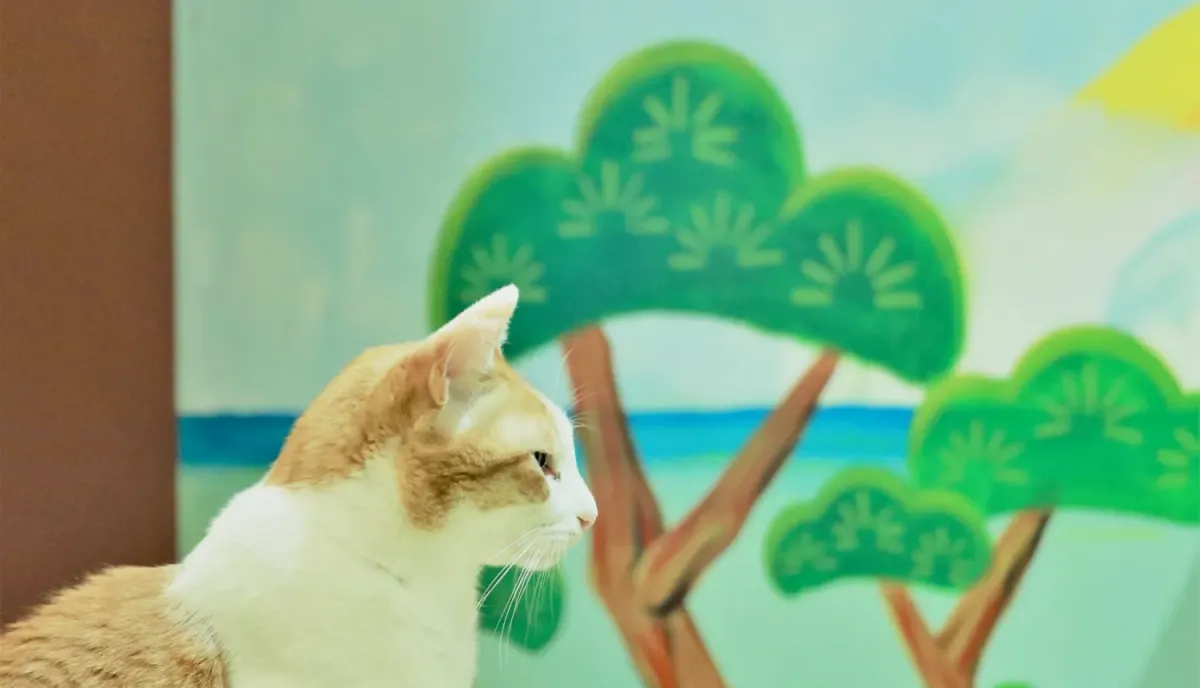
In the south, Neco Republic Osaka is two minutes from exit 7 of Nagahoribashi station. It is styled as an old public bathhouse, with a Mount Fuji mural and footbaths, and you can even sleep upstairs in its Edo-style cat inn. An hour with unlimited drinks costs ¥1,650 on weekdays and ¥1,980 at weekends, and its website is in English. Neko no Eniwa, a rescue café near Namba, opens until 10pm and charges ¥1,500 an hour. It serves no drinks, though you can bring your own bottle, closes on Thursdays, and doesn’t admit children under about 12.
If you just want to walk in, MOCHA Shinsaibashi, three minutes from exit 5 of Shinsaibashi station, charges ¥1,188 for the first 30 minutes on weekdays and ¥220 per 10 minutes after that, with drinks included. It opens 10am to 8pm daily for ages six and up. Near Dotonbori, Gurugurudo is styled like a tropical resort, with bamboo walls and a cat tower made in Bali, and its long-haired cats all come from one breeder. An hour costs ¥1,650.
 Courtesy of railway-cats.com
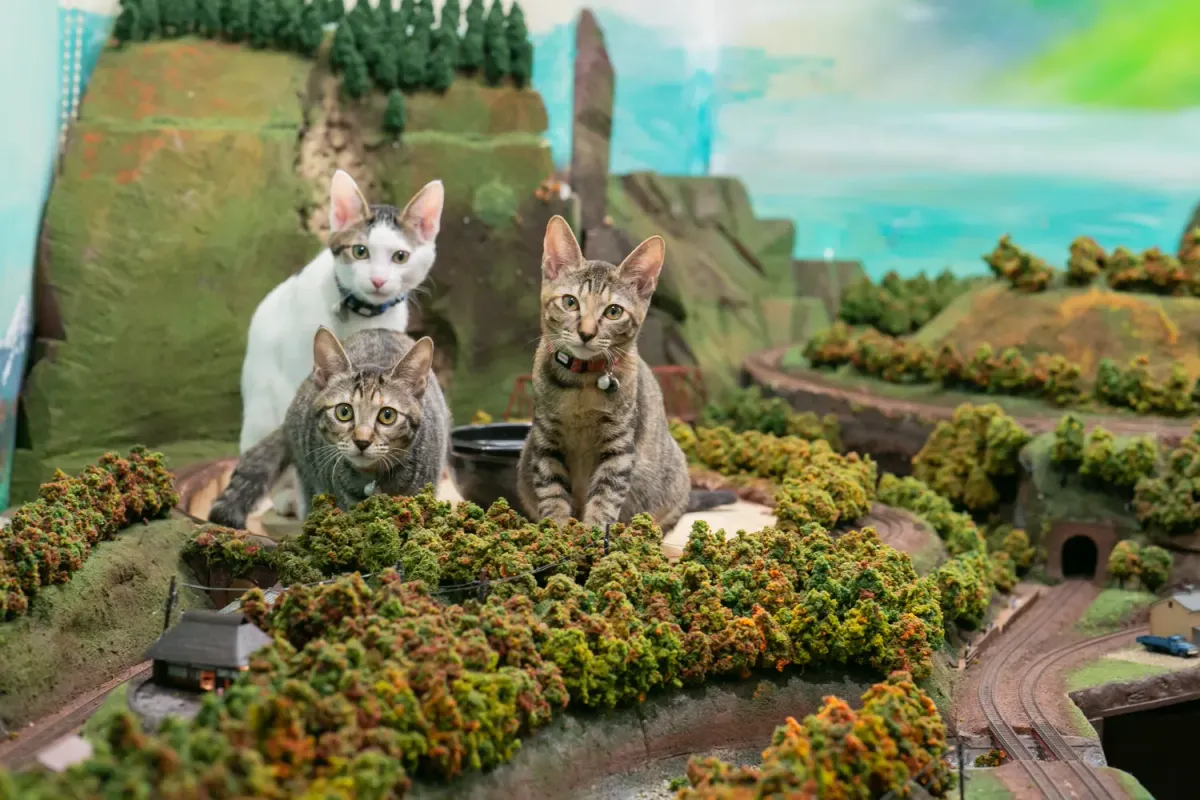
For something different, Diorama Shokudo, three minutes from the north exit of JR Teradacho station, began in 2005 as a railway-themed ramen shop. Rescue cats moved in in 2020, and they now roam over a model railway diorama, knocking the trains over. It no longer serves meals; an hour costs ¥2,000 with a drink, and the staff speak English. Its sister café, Neko no Hakobune Cats Wonderland, opened in 2024 next to the Kaiyukan aquarium in Tempozan, with about 25 rescue cats around another railway diorama. It charges ¥1,800 for the first hour (¥1,500 for ages three to five) and takes walk-ins from 11am to 6pm, which makes it an easy add-on to an aquarium visit.
Kyoto
Kyoto has fewer cat cafés than Osaka, but some of the most memorable, in old townhouses and galleries. Browse them on our Kyoto map.
 Courtesy of japancatnetwork.org
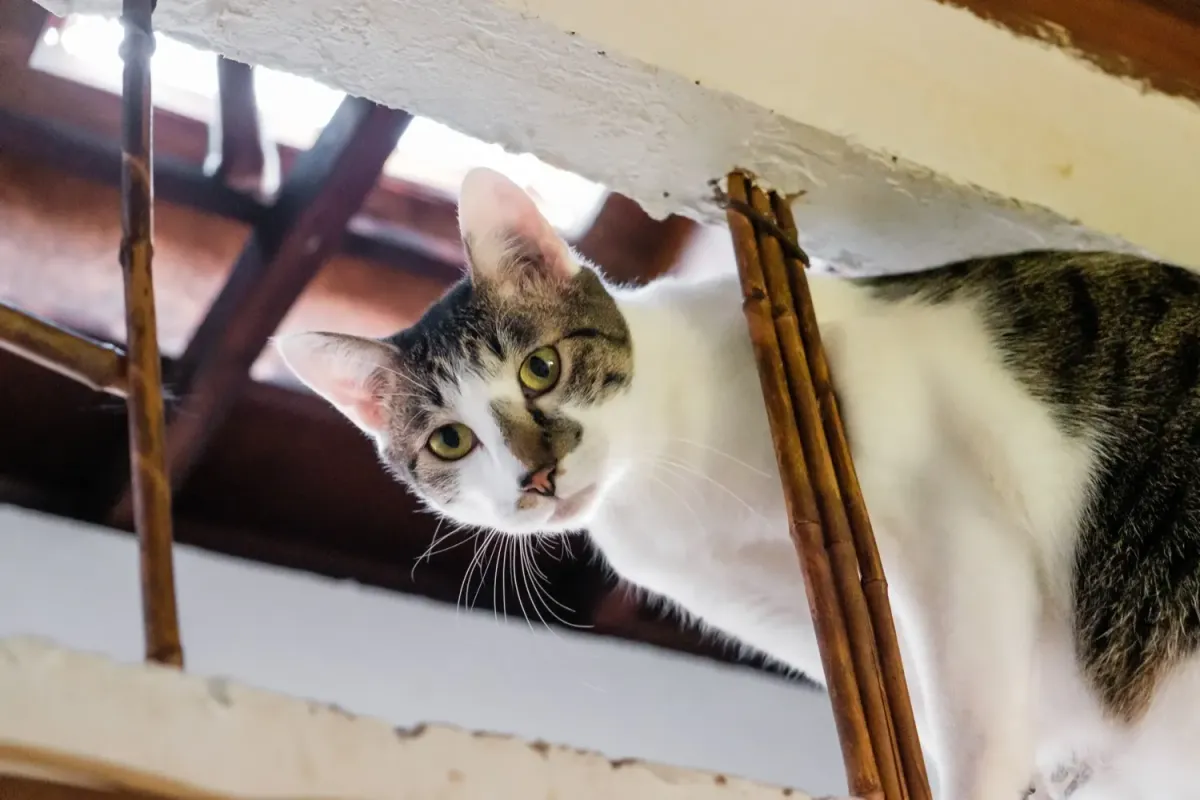
Maneki Machiya Cat Cafe is run by Japan Cat Network, a rescue charity, in a traditional machiya townhouse in Uzumasa, west of the center. It is not a drop-in café: you book a two-hour session hosted in English, for ¥2,900 per person, through Airbnb Experiences or by email. Sessions run on Tuesday to Thursday and at weekends, for up to seven guests aged five and over.
Cat’s Eye, five minutes from Jingu-Marutamachi station, is a café and art gallery on the third floor of a triangular building, where six rescue cats wander among the paintings. It opened in 2016, the owner welcomes guests in English, and about half its visitors come from abroad. An hour costs ¥1,500 with a drink. It opens 1pm to 6pm and closes on Tuesdays and Wednesdays, and with only ten seats it can fill up.
At the other end of the scale, The Cat Retreat at Utanekodo is a reservation-only experience in a machiya about a hundred years old, five minutes from Kyoto Shiyakusho-mae station, with eight rescue cats and a matcha tea ceremony. A shared 70-minute session costs ¥10,000 per person, for at least two people, and private sessions cost far more. Guests are asked not to wear perfume or visit another animal café the same day.
For an easy walk-in near the Kawaramachi shopping streets, MOCHA Kyoto Kawaramachi, on the fourth floor of the mina Kyoto building, has 22 cats and charges ¥1,200 for the first 30 minutes on weekdays (¥1,500 at weekends), drinks included. It opens 11am to 9pm for ages six and up. Nearby, Kyoto Hyo-neko no Mori is a breeder café where all 11 cats are leopard-spotted Bengals; a 30-minute visit with a drink costs ¥1,000 (¥800 for ages four to 12), and tickets are sold at the door on the day.
Nara and Kobe
Both cities are easy day trips from Osaka. In Nara, Cat Cafe Cocone is a Japanese-style café four minutes from Kintetsu Nara station and close to the Higashimuki shopping street, so it fits between the deer park and lunch. Its 20-odd cats are mostly older, and an hour with a drink costs ¥1,650 on weekdays and ¥1,980 at weekends. It opens daily from 11am to 7pm for ages eight and up and doesn’t take cards. Neko Kissa Hanagoromo, ten minutes from JR Nara station, is a smaller breeder café with Maine Coons and other long-haired cats, and it also sells kittens; an hour with a drink is ¥1,500. See our Nara map for the rest.
 Courtesy of nyanny.com
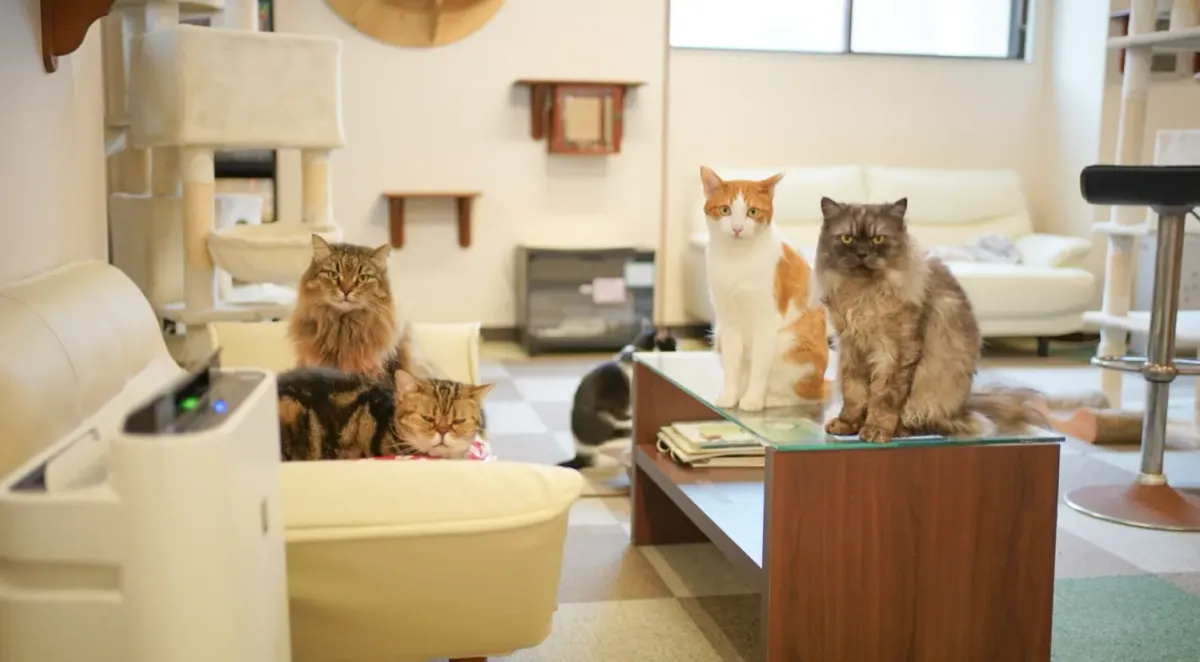
In Kobe, Cat Cafe Nyanny, two minutes from the west exit of Motomachi station, says it opened in 2007 as the first cat café in Hyogo Prefecture. Its cats, including Siberians, Somalis and Ragdolls, walk over guests’ heads on a clear acrylic catwalk. The first hour costs ¥1,100 on weekdays without a drink (¥1,320 at weekends), and it closes on Tuesdays. MOCHA Kobe Sannomiya, a minute from the subway’s Sannomiya station, is the walk-in option, with 20 cats and the chain’s usual prices. Browse more on our Kobe map.
Yokohama and Kamakura
Yokohama’s cat cafés cluster around Chinatown and Kannai. Neko Cafe Leon, a minute from the north exit of JR Ishikawacho station, opened in 2008 as the city’s first cat café, and every cat there is up for adoption through the Little Cats rescue. The first 30 minutes cost ¥1,100 with free drinks. Cat Cafe Miysis, near Isezaki-Chojamachi station, has been open since 2009 and has around 25 cats, most of them adoptable. A 50-minute visit with a drink costs ¥1,700; it opens daily from 1pm to 7pm, is cash only, and asks you to wear socks.
Two minutes from exit 3 of Motomachi-Chukagai station, Nekochan to Issho is the late option, open until 10pm with about 20 cats and beer on the menu. The first 30 minutes cost ¥1,210 with free drinks, then ¥220 per 10 minutes, and booking online is recommended. More are on our Yokohama map.
 Courtesy of kamakuranekonoma.com
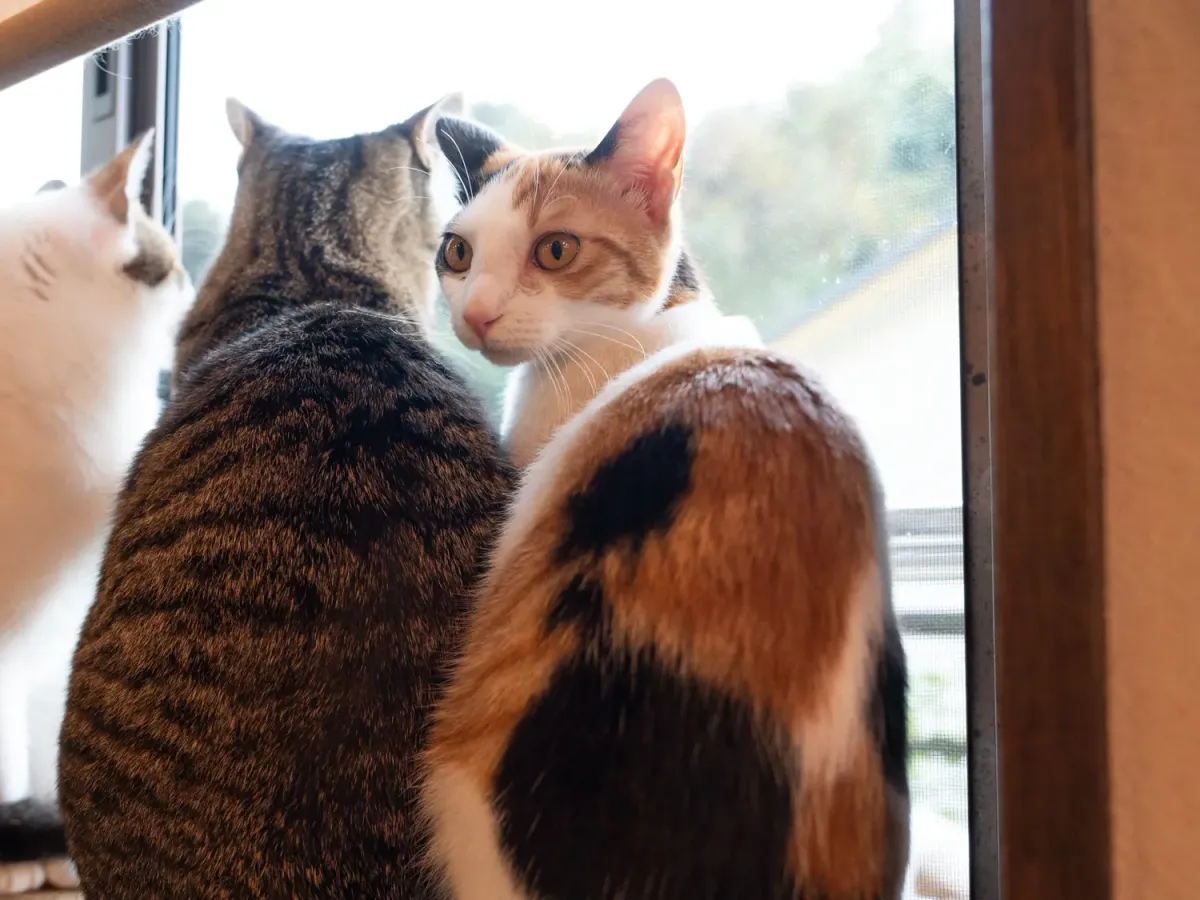
Kamakura, an hour south of Tokyo, has a rescue café made for a temple day. Kamakura Nekonoma is an old house about ten minutes on foot from the Great Buddha, where about ten cats nap on the floor and up in the wooden beams. Since it opened in 2016 it has found homes for more than 500 cats. Entry is ¥550 per 30 minutes plus a drink, it closes on Mondays and Tuesdays, and you need to book by phone (0467-40-5379). Take the bus to the Uchikoshi stop on the Enoden or Keikyu bus lines, not the Shonan Chuo bus stop of the same name.
Nagoya
Nagoya is an easy stop on the shinkansen between Tokyo and Kyoto. Rescued Cat Cafe Hemingway, three minutes from exit 4 of Imaike station, opened in 2017 and bills itself as the city’s first café with only rescue cats. It is run by a non-profit, every cat is adoptable, and an hour with a drink costs ¥1,300. It closes on Tuesdays and Fridays.
 Courtesy of hidamari-cat.com
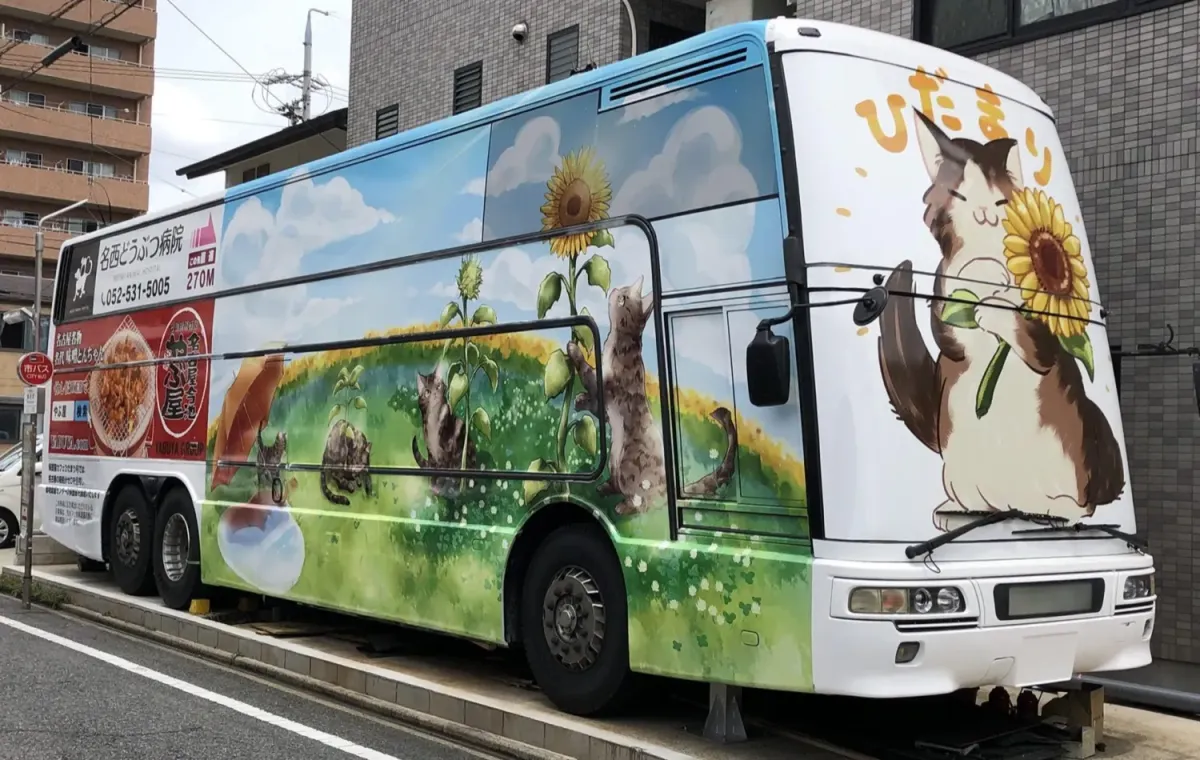
The most unusual is Hidamari-go, a rescue café in a converted double-decker bus, six minutes from Shonai-dori station. You check in downstairs and the cats live on the top deck. An hour costs ¥1,320 with unlimited soft drinks, it closes on Wednesdays and Thursdays, children under five are not admitted, and booking by phone is recommended.
In the center, MOCHA Nagoya Sakae, a minute from Yabacho station, has 20 cats and charges ¥1,100 for the first 30 minutes on weekdays. Puchi Marry Nagoya Osu fills three floors above a noodle shop in the Osu shopping district, three minutes from Osu Kannon station, and charges ¥1,095 for 30 minutes with the drink bar, daily from 11am to 9pm. Browse the rest on our Nagoya map.
Hiroshima and Onomichi
Hiroshima’s cat cafés are close to the sights. Hiroshima Neko Bugyo is an adoption café in the Hondori shopping arcade, three minutes from the Tatemachi tram stop; take the lift through the Megane Ichiba glasses shop to the third floor. Thirty minutes cost ¥1,000, or ¥1,450 for 45 minutes with a drink, it opens every day except New Year’s Day, and it takes cards. Neco Republic Hiroshima, in the old Takanobashi arcade 10 to 15 minutes’ walk from the Peace Memorial Park, is a rescue café where an hour with a bottled drink costs ¥1,870. It closes on Tuesdays, admits only six guests at a time, so book online or by phone, and has an English page.
Straight off the train, MOFF minamoa Hiroshima is inside the JR Hiroshima Station building, with about 25 pedigree cats. It charges ¥700 for 30 minutes plus a compulsory drink, then ¥250 per 10 minutes, from 10am to 8pm with no booking. On a hill in Hatsukaichi, on the way to Miyajima, Shhh… is a quiet café for rescued cats aged over ten, with a sea view towards the island. An hour costs ¥1,000 plus a drink, it closes on Wednesdays, only guests aged 13 and over are admitted, and you’ll need a taxi or car. Browse the rest on our Hiroshima map.
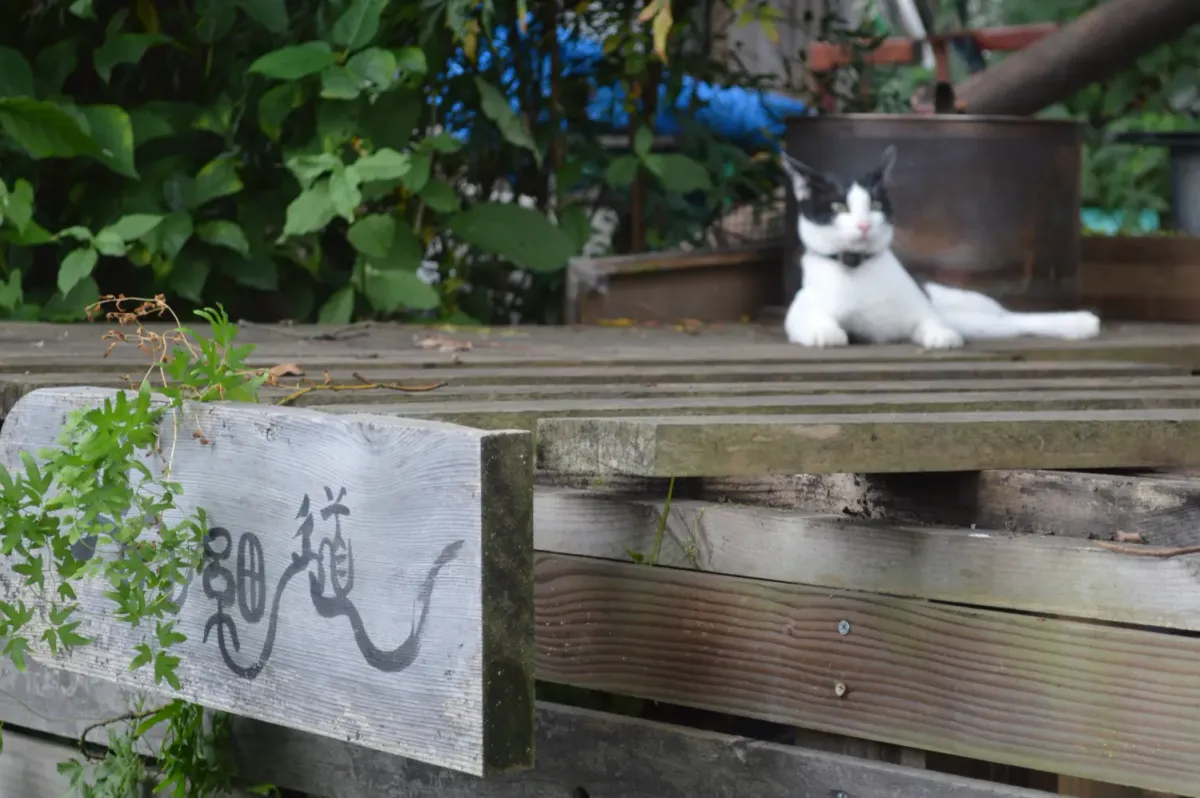 _Photo: Asturio Cantabrio, CC BY-SA 4.0, via Wikimedia Commons_
An hour east by train, the port town of Onomichi has Neko no Hosomichi, or Cat Alley, a free walk of about 200 meters through hillside lanes from Ushitora Shrine towards the Tenneiji pagoda. Since 1998, the artist Shunji Sonoyama has placed more than a thousand painted “lucky cat” stones (fukuishi) around the town. On the alley, a minute from the lower station of the Senkoji ropeway, Neko Kissa Utrecht is a tiny café with six cats, all rescued as kittens. The shop and gallery downstairs are free; upstairs with the cats, an hour costs ¥1,500 plus a drink. It opens in the afternoons only and closes on irregular days, so check its Instagram first. See our Onomichi map.
Fukuoka
Fukuoka’s two longest-running rescue cafés belong to Neko Cafe Keurig. The Daimyo branch opened in 2008, has about 30 cats and is five minutes from Akasaka station; it is open daily from noon to 9pm. Keurig The Loft, two minutes from the south exit of Nishitetsu Fukuoka (Tenjin) station, is an attic-style room looking out over the trees of Kego Shrine, open daily from 11am to 8pm. Both charge ¥1,500 an hour (¥1,250 for 30 minutes) with free soft drinks, and you don’t need to book.
For a walk-in chain café, MOCHA Tenjin Daimyo has about 18 young pedigree cats and an English website, and charges ¥1,045 for the first 30 minutes on weekdays (¥1,210 at weekends). Neko Cafe Bineko is in a house about 50 years old near Ohori Park, with pedigree cats; an hour with a drink costs ¥1,400. It closes on Thursdays and Fridays, doesn’t admit children aged 10 and under, and takes bookings by phone. Further out, Itonya-go is a shelter café run by the Fukuoka Animal Welfare Association in Sawara Ward, a bus ride from the center, at ¥1,300 an hour with free drinks. Fukuoka is also the jumping-off point for Ainoshima, the easiest cat island to reach. Browse the rest on our Fukuoka map.
Sapporo
Mewkies, opened in 2013, is a relaxed café with 14 mixed-breed cats from around Hokkaido, six minutes from Higashi-Kuyakusho-mae station. It costs ¥600 per 30 minutes, or ¥1,600 for 90 minutes with a drink, opens almost every day until 9pm, and takes cash, PayPay or au PAY only. Tsukineko Cafe, near Nishi-28-chome station, opened in 2010 as Sapporo’s first rescue cat café. Since April 2025 it has been run as a shelter, so visits are by donation (about ¥1,000) and booked by phone, for up to an hour. It closes on Tuesdays and Wednesdays.
Seven minutes from Susukino station, Mataxtabi is a rescue café in a house more than 80 years old, staffed through a disability employment-support program. An hour costs ¥1,000 plus an order from the menu, which includes proper meals, and there is a shrine-themed room for adults. It opens 11:30am to 5pm and closes on Wednesdays. See our Sapporo map, or the Hokkaido map for Hakodate, Asahikawa and Obihiro.
Okinawa
On Kokusai-dori, Naha’s main street, Nekomaru Chaya is a rescue café on the fifth floor of a building three or four minutes from Makishi station. It has 14 resident cats and around 16 waiting for adoption, and has rehomed more than 650. An hour costs about ¥1,200, children of any age are welcome, and you’ll need socks. A few minutes away, MOFF Okinawa Kokusai-dori opened in April 2026 with about 20 pedigree cats, charging ¥900 per 30 minutes plus a ¥380 drinks fee, daily from 11am to 8pm.
If you have a car, Hogo Neko Shokudo Noraya in Yomitan is a diner run by a cat rescue charity to fund its shelter and trap-neuter-return work. It serves home-style lunches from Saturday to Monday, and its cat room is by reservation only. The Puchi Marry cat café in Chatan’s American Village closes on 1 November 2026. Browse the rest, including cafés on Ishigaki and Miyako, on our Okinawa map.
Japan’s Cat Islands
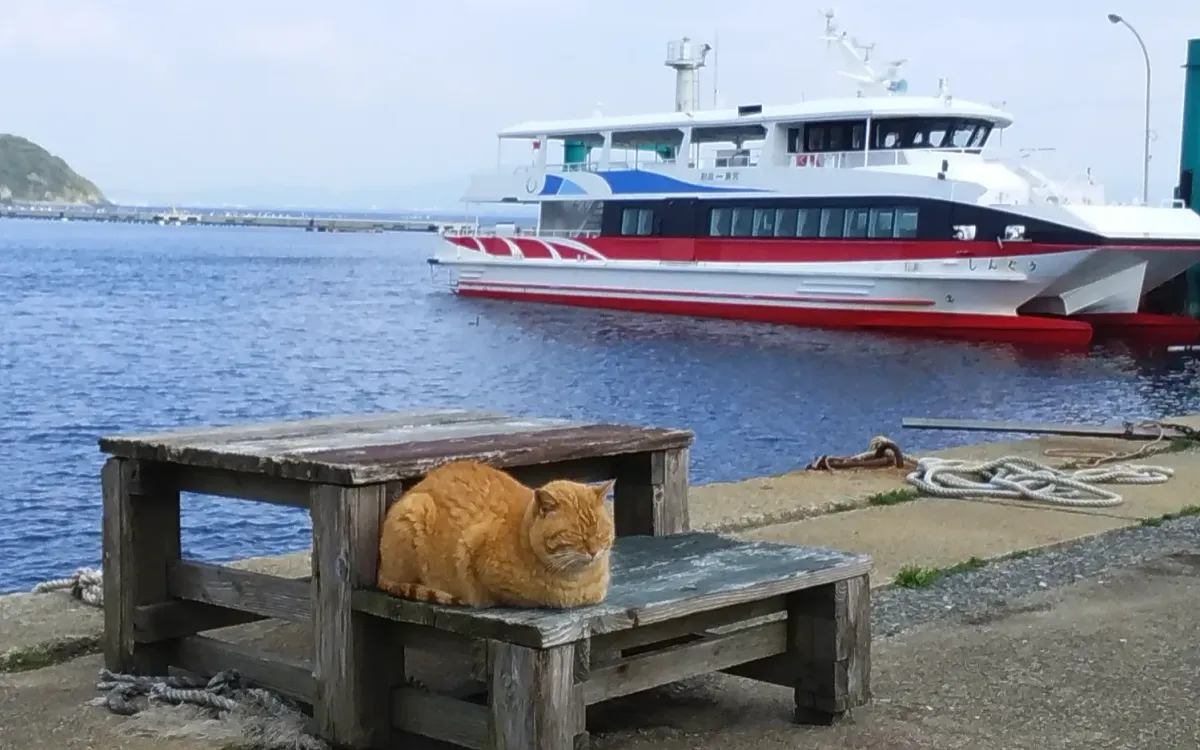 Photo: 水だらけのプール, CC0, via Wikimedia Commons
Japan has a handful of small fishing islands where cats outnumber people, and they have become a pilgrimage for cat lovers. They are not cat cafés. They are working villages with few or no shops, toilets or places to eat, the cats are semi-feral, and the residents are mostly elderly. Take your rubbish home, stay off private land, never take a cat away, and only feed the cats where the island allows it.
- Tashirojima (Miyagi). The best-known cat island, with a small cat shrine (Neko-jinja) and an estimated 100 to 150 cats. Ajishima Line ferries leave Ishinomaki about three times a day; the fast boat takes 44 minutes and costs ¥1,250 each way, cash only. Check the timetable, which is cut back while the ships are in dry dock.
- Ainoshima (Fukuoka). The easiest to reach: a 17-minute town ferry from Shingu port north of Fukuoka, for ¥480, five or six times a day. Around 180 cats live there, and a local group has been neutering them since 2021. Weekend boats can fill up.
- Aoshima (Ehime). Famous for its crowds of cats, but now a fading colony: about 70 mostly old cats and only a few residents remain after a 2018 neutering project. The ferry from Nagahama sails twice a day, takes 35 minutes and carries only 34 passengers a day in total, islanders first, so it’s a gamble. Cats may only be fed at the island’s feeding station.
- Sanagishima (Kagawa) and Manabeshima (Okayama) are quiet islands in the Seto Inland Sea, reached by ferry from Tadotsu and Kasaoka. Sanagishima has about a hundred cats and no shops, so bring food and drink.
- Fukashima (Oita). About 60 cats and 11 people, 30 minutes by boat from Kamae port in Saiki, three times a day.
For a gentler version close to Hiroshima, Onomichi’s Cat Alley needs no ferry at all.
More Cat Sights in Japan
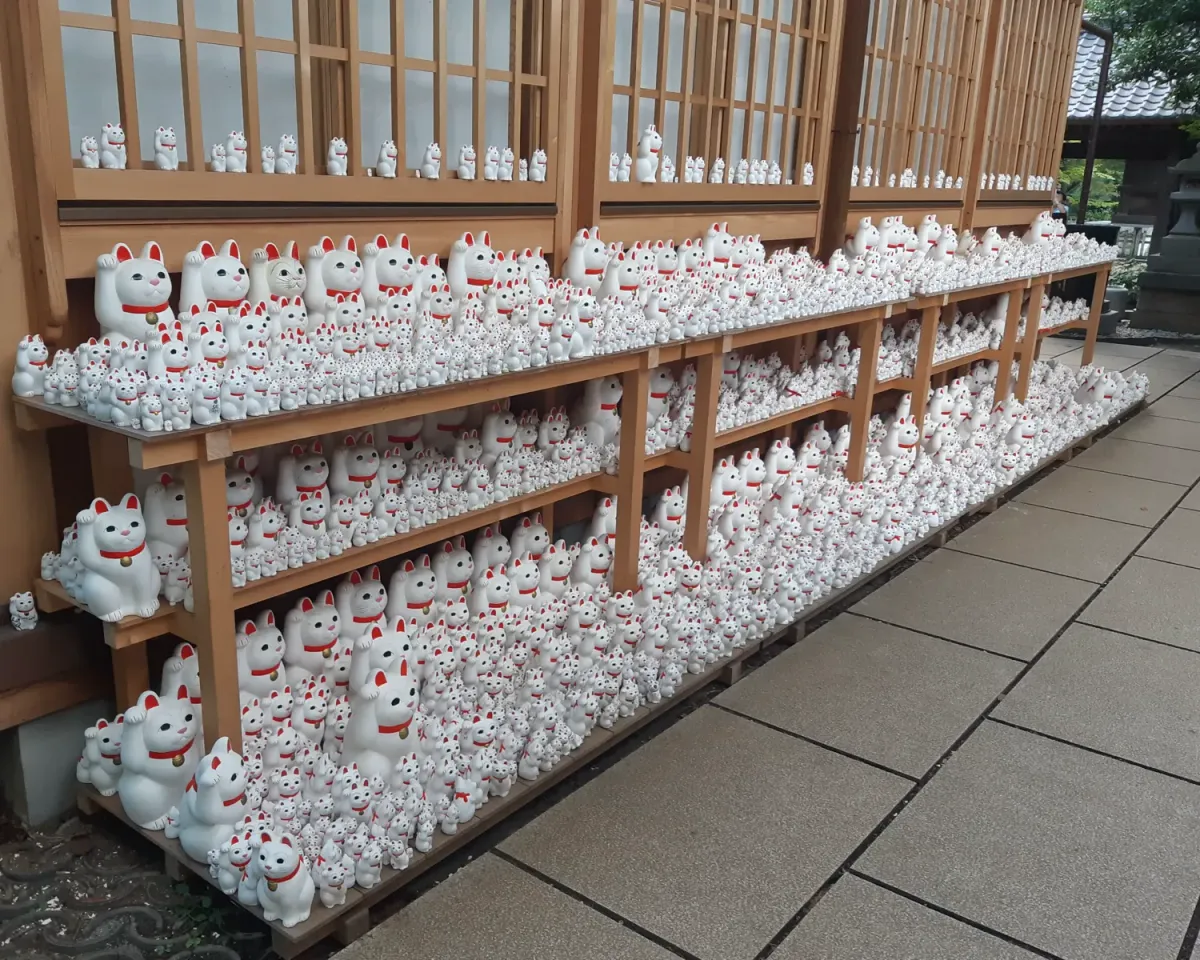 Photo: Ménestor, CC0, via Wikimedia Commons
- Gotokuji Temple, Tokyo. One of the temples that claims to be the birthplace of the maneki-neko, the beckoning cat, with thousands of white cat figurines left by visitors. The grounds open from 6am to 5pm. The temple asks visitors not to write on the figurines, and tour groups and photo shoots now need permission.
- Imado Shrine, Asakusa. A rival claimant to the maneki-neko story and a popular shrine for people looking for love, a short walk north of Senso-ji.
- Kishi Station, Wakayama. The station made famous by Tama, the stationmaster cat, still has feline staff. Nitama, Tama’s successor, died in November 2025, and since January 2026 Yontama has been stationmaster at Kishi, with Gotama and Rokutama covering her days off. They work from 10am to 4pm on set days, so check the railway’s site before you travel.
Capybara, Owl and Other Animal Cafés
Many Japanese “animal cafés” mix cats with capybaras, owls, hedgehogs, otters or fennec foxes, and capybara cafés in particular have become a tourist draw. They need the same exhibition licence as a cat café, but the national standards on staffing and space only cover dogs and cats. Researchers have raised concerns: a 2025 study of 79 Japanese animal cafés gave low welfare scores across every animal group, with birds the worst. In September 2026 the Ministry of the Environment started its first nationwide survey of animal cafés. If an animal can’t move away from visitors, is handled constantly or is kept in a small cage, consider going elsewhere. Rescue cat cafés, where your fee supports cats waiting for homes, are the kindest choice.
Whichever city you’re in, a Japanese cat café is one of the most relaxing hours of a trip. Browse all of them on our Japan cat café map, and if you’re new to the idea, our guide to what a cat café is covers the etiquette in more detail.