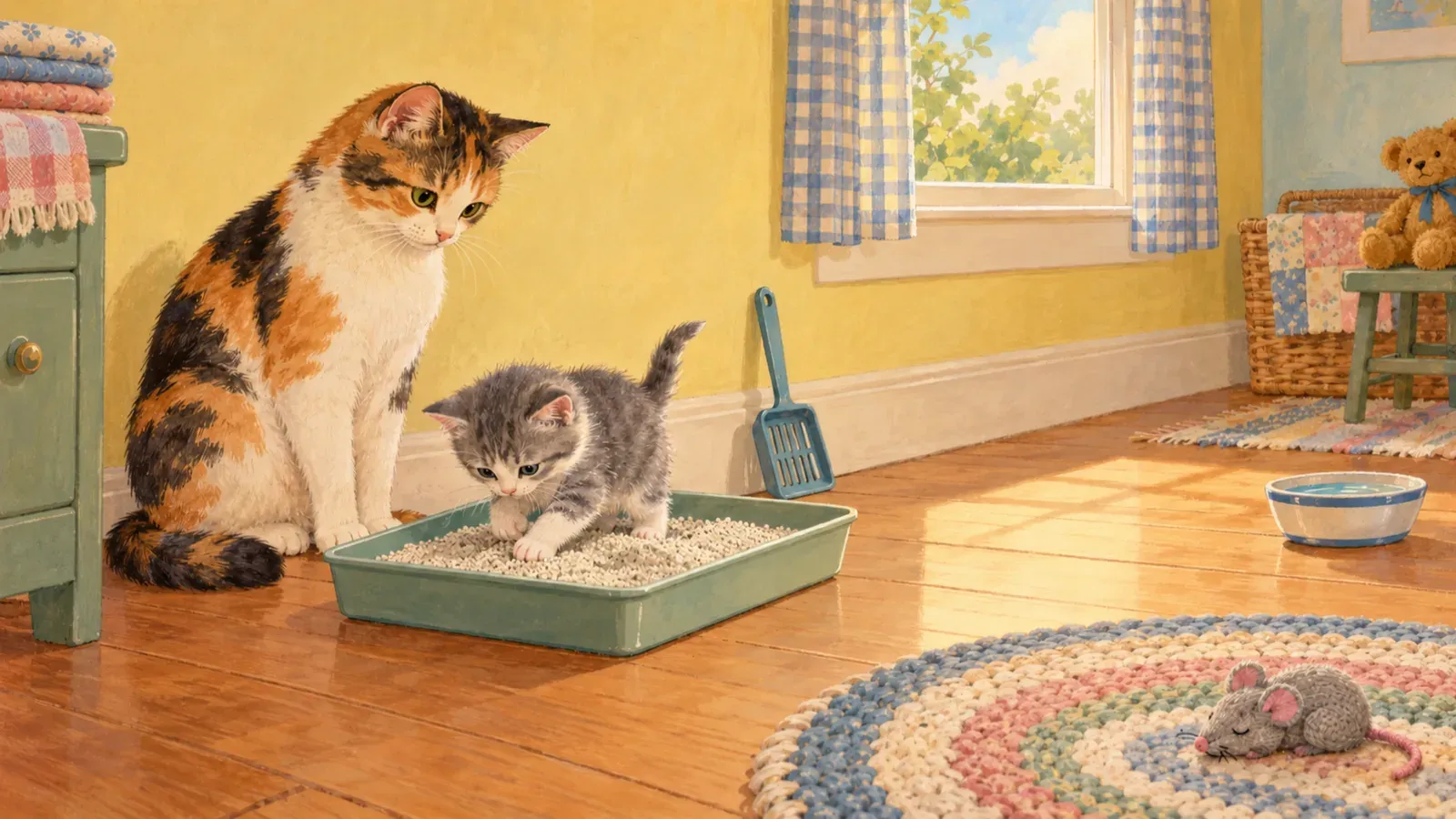
Good news: you mostly don’t have to teach a kitten to use a litter box. Kittens have a strong instinct to dig in soft, loose material, and Kitten Lady, the kitten care educator, calls “litter training” a bit of a misnomer. Your job is to make the right spot easy to find and easy to get into, and to keep it clean. The kitten usually does the rest.
Here’s the short version:
- Start at three to four weeks if your kitten is that young. An older kitten can start the day it comes home.
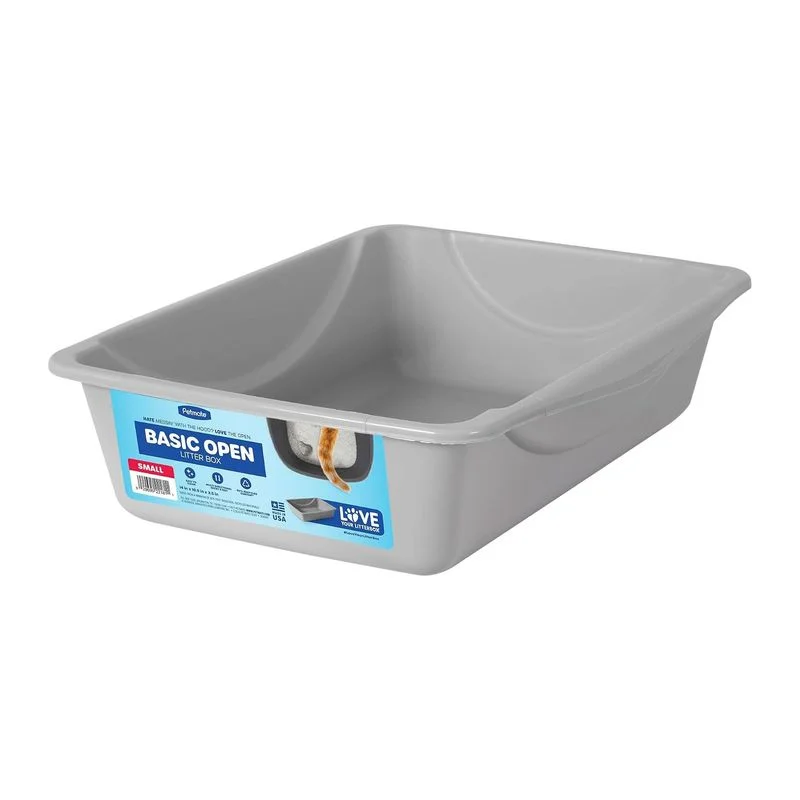
- Use a shallow, open box that it can walk into, like the Petmate Basic Open.
- Keep it in one small room at first, with food, water and a bed some way from the box.
- Choose unscented litter. Use non-clumping litter until at least 8 to 10 weeks to be on the safe side.
- Put your kitten in the box after meals, naps and play, then let it get on with things.
- Never punish accidents. Clean them with an enzyme cleaner, and call a vet if your kitten is straining or isn’t passing urine.
When Do Kittens Start Using a Litter Box?
For the first few weeks, kittens can’t go by themselves. Their mother licks them to make them urinate and defecate, and they learn to go voluntarily at about four weeks, according to the feline house-soiling guidelines from the American Association of Feline Practitioners and the International Society of Feline Medicine. At three to five weeks they explore litter and may even lie in it. Between five and seven weeks they start using it reliably, and covering what they’ve done usually begins at about seven weeks.
Sources differ a little on when to put out a box. International Cat Care and Kitten Lady say from about three weeks, and petMD says around four weeks, when weaning starts. There’s no harm in offering a box early, as long as the kitten can get in and out.
Most kittens learn by watching their mother, but they don’t need her to. A kitten raised by hand gets there too, and a kitten you adopt at eight weeks or older has usually got the idea already. It just needs to learn where the box is in your home.
Orphaned or Bottle-Fed Kittens
Orphaned kittens under about four weeks need you to do what their mother would. Kitten Lady’s guide to stimulating a kitten says to gently rub the kitten’s bottom in a circular motion with a soft tissue at each feeding, until it stops urinating, which usually takes less than a minute. Wipe it clean afterwards so that urine doesn’t burn its skin. Keep doing this after you introduce a box, until you’re sure the kitten is using it regularly.
To get started, Best Friends Animal Society suggests putting a used tissue or cotton ball in the box, so the kitten connects the smell with the place. Kittens typically start using it within a few days. Very young orphans need specialist care in general, so ask your vet or a local rescue for guidance.
What You’ll Need
A Simple Kitten Litter Box
Petmate Basic Open Litter Pan, Small
A cheap, plain open pan, about 14 by 10.5 inches (36 by 27 cm) with sides about 3.5 inches (9 cm) high. Light enough to move and easy to wash, with more than 35,000 ratings on Amazon.
Buy on AmazonA low-sided, open box. A kitten has to be able to climb in without help, and to get out in a hurry. The Petmate Basic Open is a good cheap choice, close in size to the 13 by 9 inch (33 by 23 cm) tray that feline behavior consultant Sally Foote recommends in petMD. Its sides are too high for a three-week-old, though. For kittens that small, Kitten Lady suggests a cardboard tray, such as the flat that canned food comes in.
Skip hoods and tall sides for now. VCA Animal Hospitals’ behavior specialists note that small kittens need low sides, and an open box is also easier for you to check. Self-cleaning boxes aren’t suitable either, as we explain below.
The right number of boxes. The usual rule is one per cat plus one extra, and at least one on each floor. In a large home, kittens may not make it far: Kitten Lady suggests keeping a box within 10 feet (3 m) of an older kitten at all times.
A scoop, and a mat if you like. Kittens scatter a lot of litter while they’re learning. Put the box somewhere easy to clean.
Which Litter Is Best for Kittens?
Use something unscented, soft underfoot and low in dust. Kittens often taste things while exploring, so the real question is whether clumping litter is safe.

Non-Clumping, for Young Kittens
Fresh News Paper Pellet Litter
Soft, non-clumping pellets of recycled paper with no added fragrance. The maker says they're over 99% dust free. This 12 lb (5.4 kg) bag lasts a single kitten a good while.
Buy on AmazonIs Clumping Litter Safe for Kittens?
Many kitten specialists say to wait, but they disagree about how long, and the evidence behind the warning is thin.
- Best Friends Animal Society tells its fosters to use only non-clumping litter, because kittens often try to eat litter while they’re learning. It gives no age for switching.
- petMD says non-clumping litter for kittens under 8 to 10 weeks.
- Kitten Lady says no clumping litter until a kitten is at least two to three months old and used to the box.
- International Cat Care suggests sand, wood or paper instead of clay for a litter of young kittens, because some eat it.
- VCA and Cats Protection give no kitten warning on their litter training pages. VCA says most cats prefer fine clumping litter.
We couldn’t find a study or a published case showing that clumping litter has blocked a kitten’s gut. A column in Cornell’s CatWatch newsletter describes the reports as anecdotal and knows of no controlled study. The one case report we found, from 1996, describes an adult cat that regularly ate bentonite clay litter and became seriously ill, with no blockage.
So this is a precaution, not a proven danger, but it costs very little. Our view: use a non-clumping litter such as Fresh News until your kitten is about 8 to 10 weeks old and clearly isn’t eating it. Then move to fine, unscented clumping litter if you like, which research suggests most cats prefer. Our guide to the best cat litter compares the options. Many kittens are adopted at about eight weeks and already use one kind, so ask what they’ve been using and start with that.
For Older Kittens
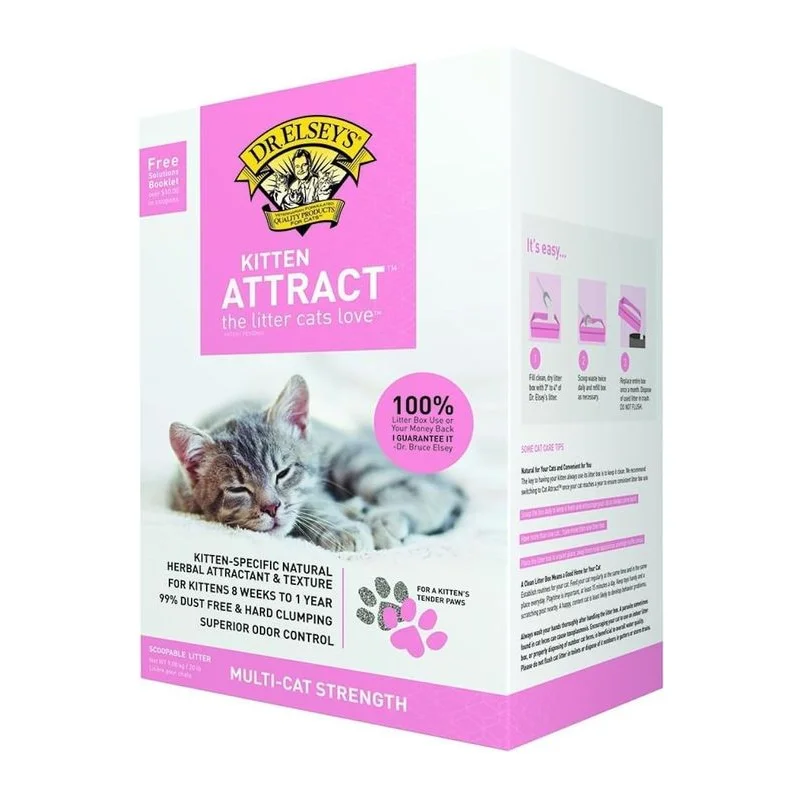
Dr. Elsey's Kitten Attract
A fine, hard-clumping clay litter with a herbal attractant, sold for kittens from 8 weeks to 1 year. The maker says it's 99% dust free.
Buy on AmazonIf your older kitten is slow to use the box, Dr. Elsey’s Kitten Attract is worth a try. It’s the clumping litter we’d reach for first, with a herb the maker says draws kittens in. We know of no independent evidence for the attractant, and it’s a clumping clay, so we wouldn’t use it on very young kittens.
How Deep Should the Litter Be?
Sources range widely, from about an inch (2.5 cm) to at least 3 inches (7.5 cm). For a tiny kitten, Best Friends suggests just enough to cover the bottom of the tray, so it can walk easily. Add more as your kitten grows, and aim for about 2 inches (5 cm) or a little more once it’s bigger. If it digs happily, the depth is fine.
Where to Put the Litter Box
Start in one small room, such as a bathroom or spare room, with the box, food, water, a bed and toys. A kitten that can’t find the box in time will go somewhere else, so a small area makes success easy. Kitten Lady suggests keeping kittens of three to eight weeks who are learning in one room.
- Keep the box apart from food, water and beds. Cats don’t like to toilet where they eat or sleep, so put them at opposite ends of the room.
- Pick a quiet spot. Away from noisy appliances and busy doorways, somewhere your kitten won’t get ambushed.
- Don’t move it. Once your kitten is using the box reliably, leave it in place, and if you must move it, the guidelines suggest going a few inches at a time.
Let your kitten explore more of your home gradually, once it’s using the box every time. VCA suggests short supervised outings after it has used the box. If the kitten then starts having accidents, go back to a smaller space for a while, and add a box near where it spends its time.
How to Litter Train a Kitten, Step by Step
- Show it the box. As soon as your kitten arrives, or once it’s three to four weeks old, put it gently in the box and let it sniff. Lift it by scooping under its chest and bottom, and don’t force it to stay.
- Go back at the likely times. Put your kitten in the box after meals, after naps, after play, and whenever you see it sniffing, scratching or crouching somewhere else. There’s no set schedule to follow.
- Encourage digging. If your kitten just stands there, scratch at the litter with your finger or a spoon, as VCA suggests. International Cat Care says you can gently guide a forepaw through the litter. Some kittens object, so stop if it bothers yours.
- Step back. Let your kitten get on with it. Watching closely can put it off, and it may not go the first few times.
- Reward it. Praise your kitten or give a small treat straight after it leaves the box, as petMD suggests.
- Leave a little scent. In the early days, keep a little soiled litter in the box, which International Cat Care says helps a kitten understand what it’s for. If your kitten goes elsewhere, move the mess or a used tissue into the box.
- Keep it clean. Scoop at least once a day, and more often if you can. Kittens may refuse a dirty box.
No source gives a set time for all of this. Many kittens get it within days, but accidents can go on for longer, particularly as a kitten gets more of your home to roam in. If you’ve changed the box, the room or the litter, expect a small setback.
Cleaning the Litter Box
Scoop at least once a day. The guidelines say at least daily, and International Cat Care and Cats Protection say twice. Wash the whole box every week or so with hot water and plain soap, though advice ranges from weekly to monthly, and experts themselves disagree. Paper pellets need changing more often than clumping litter, since they don’t form clumps you can lift out.
Avoid strong chemicals. Ammonia smells like urine and may encourage your kitten to go there again, and International Cat Care warns against phenols, which are in some disinfectants and are unsafe for cats. Don’t add scented powders or liners either.
If Your Kitten Has an Accident
Accidents are normal. Kittens have small bladders and are easily distracted, and they may simply not have got to the box in time.
Don’t punish it. Never shout at a kitten, hit it or rub its nose in the mess. VCA and the ASPCA are clear on this, because it only teaches your kitten to be scared of you and to hide when it needs to go. If you catch it in the act, a brief, gentle noise can interrupt it without scaring it. Then lure it to the box or carry it there calmly, if it isn’t frightened.
Clean it properly. Regular cleaners can leave a smell that only your kitten can detect. Use an enzyme cleaner, and clean beyond the edge of the stain, up to three times its visible width, the guidelines say. Avoid ammonia, and Cornell also says to avoid vinegar.
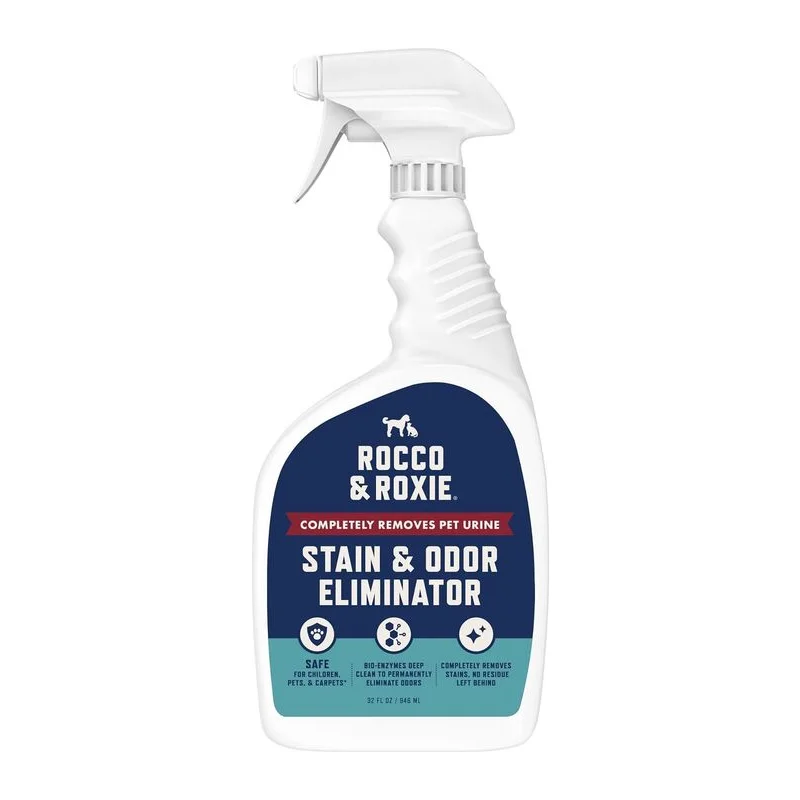
For Accidents
Rocco & Roxie Stain & Odor Eliminator
An enzyme cleaner for urine, feces and vomit on carpets, floors and furniture. Our pick for cat urine, and the one we'd keep with your kitten supplies.
Buy on AmazonOur guide to the best enzyme cleaners for cat urine explains how to get the smell out, and how to find old stains with a UV light.
Find the reason. If the accidents keep happening, try these in order:
- The box is too far away. Add another one where your kitten has been going, as Kitten Lady suggests.
- It’s too hard to get into. Try lower sides, or cut a lower entrance.
- It’s dirty. Scoop more often.
- The litter is wrong. Try a finer or softer litter, or go back to what your kitten used before. Change litter over about a week by mixing it in.
- It’s a stressful place. Move the box away from noise, dogs or small children.
- A new routine. A move or a new pet can set a kitten back, so return to a smaller area for a while.
When to Call the Vet
Sudden problems, or accidents that don’t improve, may not be about training. PetMD lists parasites and urinary tract infections, which are uncommon in kittens, among the medical causes, and diarrhea can make it impossible to reach the box in time.
Get help urgently if your kitten:
- Is straining in the box and passing little or no urine. International Cat Care says this must be seen urgently, and a blockage can be life-threatening.
- Hasn’t urinated for a long time. Best Friends tells its fosters to call for help if a kitten under eight weeks has gone more than 12 hours without urinating.
- Has diarrhea and is lethargic, is vomiting or isn’t eating, or has blood in its stool, which VCA says needs care right away. Young kittens can dehydrate quickly.
Book a regular visit if your kitten has mild diarrhea that lasts more than a couple of days, keeps having accidents after you’ve tried the steps above, or is eating litter.
If Your Kitten Eats Litter
A taste now and then is normal curiosity in a young kitten. If it keeps happening, switch to a non-clumping paper litter, and talk to your vet. PetMD says that eating litter can also point to anemia, parasites or a diet problem, and that vomiting, constipation, coughing or lethargy with it needs a vet’s attention.
Moving Up to a Bigger Box
Your kitten will outgrow a small pan within a few months. The guidelines suggest a box about 1.5 times your cat’s length from nose to the base of the tail, and larger boxes do seem to be popular. In a 2014 study of 74 cats, an 86 cm (34 inch) box was used much more than a regular one.
Move up when your kitten looks cramped or starts going over the edge. Put the new box next to the old one for a while, then take away the small one once your kitten has switched. Our guide to the best litter boxes has our picks for adult cats.
What About Self-Cleaning Litter Boxes?
Wait. Most have weight limits, because a very small kitten might not trigger the sensor. The Litter-Robot 4’s manual requires any cat using its automatic mode to weigh at least 3 lb (1.36 kg), and PETKIT’s Pura Max 2 manual doesn’t recommend it under six months or 1.5 kg (3.3 lb). Check the manual for any model. Start with a plain box, then read our guide to the best self-cleaning litter boxes when your kitten is grown and reliable.
Toilet training kits are best avoided too. We didn’t find a position from a major vet body, but vets who have written about it, such as Preventive Vet’s Dr. Jason Nicholas, point out that it goes against a cat’s instinct to dig and bury, and hides changes in urine that can warn of illness.
Litter Training a Kitten in Short
Give your kitten a shallow, open box with unscented litter in a small room, away from its food and bed. Put it in the box after meals, naps and play, then step back. Use non-clumping litter until it’s about 8 to 10 weeks old as a precaution. Scoop every day, never punish accidents, and clean them with an enzyme cleaner. Call a vet straight away if your kitten is straining or not passing urine. When it’s reliably using the box, open up the rest of your home a little at a time. If you’re still preparing, our checklist of everything you need before adopting a cat covers the rest.