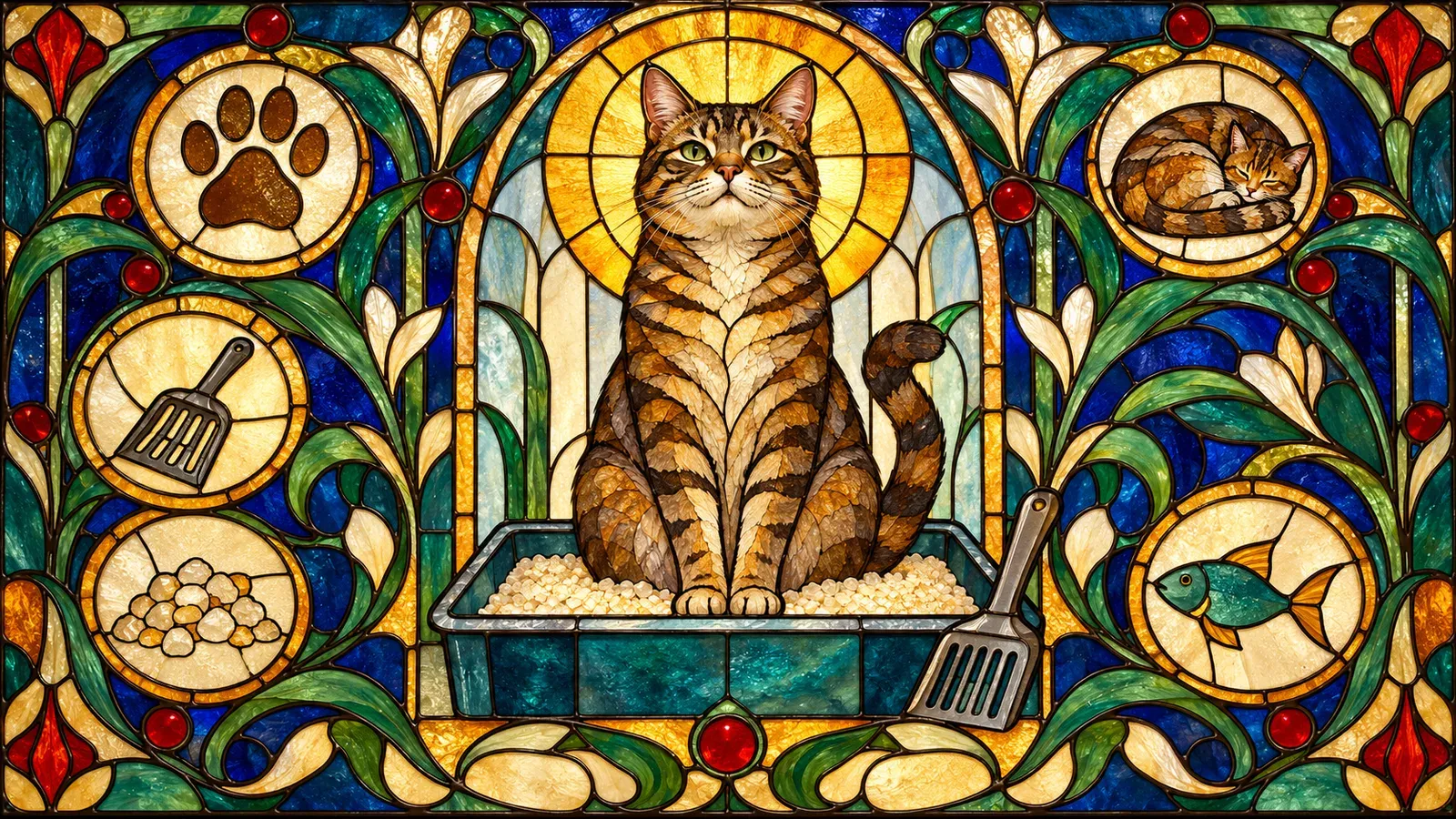
Your cat has an opinion about litter, and it is usually the deciding one. A litter that smells clean to you can be too perfumed for a cat, a pellet that saves you scooping can feel wrong underfoot, and a cat that dislikes its litter will start going somewhere else. The best litter is the one your cat uses every time, that you can keep clean, and that doesn’t fill your home with dust.
We compared litters on what cats are known to prefer, how well they clump and control odor, how much dust and tracking they produce, and what they cost per pound. One litter suits most homes. The others are for particular needs.
- Best overall: Dr. Elsey’s Ultra Unscented, a plain clumping clay that forms firm clumps and costs little.
- Best for multiple cats: Boxie Probiotic, a low-dust clumping clay with probiotics that slow odor between scoops.
- Best lightweight: Tidy Cats LightWeight Free & Clean Unscented, half the weight of regular clay to carry.
- Best plant-based: World’s Best Cat Litter Multiple Cat Unscented, a clumping corn litter with far less dust than clay.
- Best for kittens and after surgery: Fresh News Paper Pellets, a soft, dust-free paper litter that doesn’t clump.
- Best crystal litter: PetSafe ScoopFree Premium Crystal Unscented, silica crystals that soak up urine and last for weeks.
What Cats Prefer
Fine, soft and clumping. In a classic preference study, cats used a fine-grained clumping litter more than twice as often as the next choice, and left boxes of wood, grain and recycled paper unused. The feline house-soiling guidelines of the American Association of Feline Practitioners and the International Society of Feline Medicine sum it up: most cats prefer soft, unscented clumping litter. A 2023 survey of more than 3,000 cats in Italy found that cats on paper and other less common litters were about twice as likely to soil outside the box as cats on clumping litter.
Unscented. Many cats dislike perfumed litter, deodorizers and box liners, and the AAFP and ISFM advise against them. The evidence on scent is mixed, but you lose nothing by skipping it. As a veterinary behaviorist at UC Davis put it to Wirecutter, “The scent is for the humans.” A clean box controls odor better than any fragrance.
Low dust. Dusty litter is among the suspected triggers of feline asthma, according to the Cornell Feline Health Center. “99.9% dust-free” is on almost every bag, and none of them are. If your cat or anyone in your home has asthma, a low-dust clay, corn or paper litter is worth paying a little more for.
Clean. Cats avoid a dirty box. In the Italian survey, cats whose litter was scooped only three times a week were more than twice as likely to soil elsewhere as cats whose litter was scooped twice a day.
If you aren’t sure what your cat likes, set up two boxes side by side with different litters and see which one they choose, as the ASPCA suggests.
Best Overall: Dr. Elsey’s Ultra Unscented
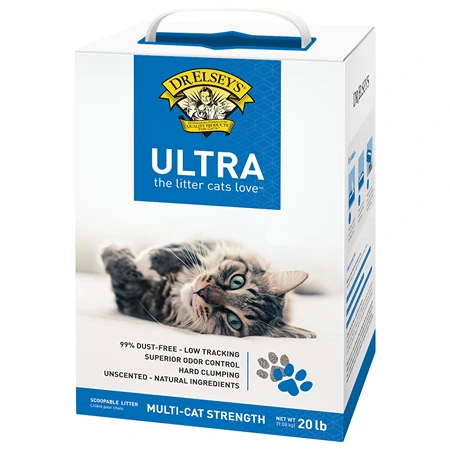
Best Overall Cat Litter
Dr. Elsey's Ultra Unscented Cat Litter
A plain, unscented clumping clay with medium granules that forms firm clumps, controls odor well and costs less per pound than most litters.
Buy on AmazonDr. Elsey’s Ultra Unscented is about as simple as litter gets: bentonite clay, with no fragrance and no additives. That simplicity is the point. It is the soft, unscented clumping litter that cats prefer in study after study, and it has been Wirecutter’s top pick for years. In its test across ten households, it formed the firmest clumps and kept odor down for two weeks.
Firm clumps matter more than they sound. A clump that holds together comes out in one scoop, so you throw away less clean litter with the waste and the box stays fresh for longer. The medium granules track less than finer clays. It comes in a 40-pound bag, and it is one of the cheapest litters per pound you can buy.
Good to know:
- It is low in dust but not dust-free. Some owners say it has been dustier in recent years.
- The 40-pound bag is heavy and doesn’t reseal. Pour it into a lidded bin.
- Clumps can stick to the bottom of the box if the litter is too shallow. Keep it at least two inches deep.
Best for Multiple Cats: Boxie Probiotic
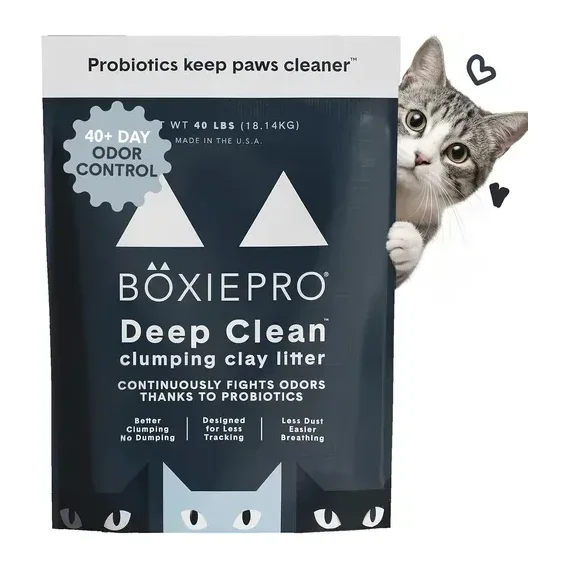
Best Cat Litter for Multiple Cats
Boxie Probiotic Clumping Cat Litter
An unscented, very low-dust clumping clay with added probiotics that break down odor between scoops, and flat-topped clumps that suit automatic litter boxes.
Buy on AmazonA box shared by several cats gets used more between scoops, and that is where Boxie Probiotic earns its higher price. It is an unscented clay with added probiotics, which break down the compounds that cause odor instead of covering them up with perfume. In The Spruce Pets’ test of 29 litters it was the overall winner, still controlling odor after three days without scooping, with a soft texture and very little dust.
It forms flat, hard-topped clumps that sit on the surface rather than sinking to the bottom, so they come out cleanly and don’t break apart. That also makes it a good match for automatic litter boxes, which need a litter that clumps firmly. It used to be sold as BoxiePro Deep Clean, and some bags still carry that name.
Good to know:
- It costs about twice as much per pound as Dr. Elsey’s.
- The probiotics slow odor; they don’t replace scooping. With three or more cats, odor builds up within a few weeks unless you change the litter.
- Flat clumps can break if a cat steps on them before you scoop.
- In 2026 some owners reported that it performs worse since the brand changed its name from Boxiecat to Boxie.
Best Lightweight: Tidy Cats LightWeight Free & Clean Unscented
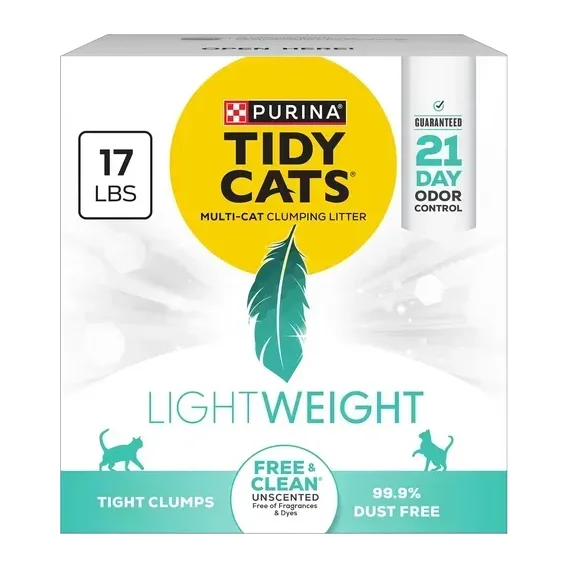
Best Lightweight Cat Litter
Tidy Cats LightWeight Free & Clean Unscented
A clumping clay half the weight of regular litter, with activated charcoal for odor and no fragrance or dyes, sold in a 17-pound box that fills a box like 34 pounds of standard clay.
Buy on AmazonIf you carry litter up stairs or have trouble lifting heavy bags, Tidy Cats LightWeight Free & Clean Unscented gives you the same amount of litter for half the weight. A 17-pound box fills about as much as 34 pounds of regular clay. It has activated charcoal for odor and no fragrance or dyes, and it comes in a sturdy box instead of a floppy bag.
It clumps firmly, and it is one of the least dusty clay litters. In Wirecutter’s test, the regular Free & Clean Unscented produced the least dust and the strongest clumps of any litter it tried.
Good to know:
- Its small, round granules stick to paws, and it tracks more than most clays. Put a litter mat outside the box.
- It costs more per pound than standard clay, though not per box filled.
- Lightweight litter can be kicked out of a shallow box more easily.
Best Plant-Based: World’s Best Cat Litter Multiple Cat Unscented
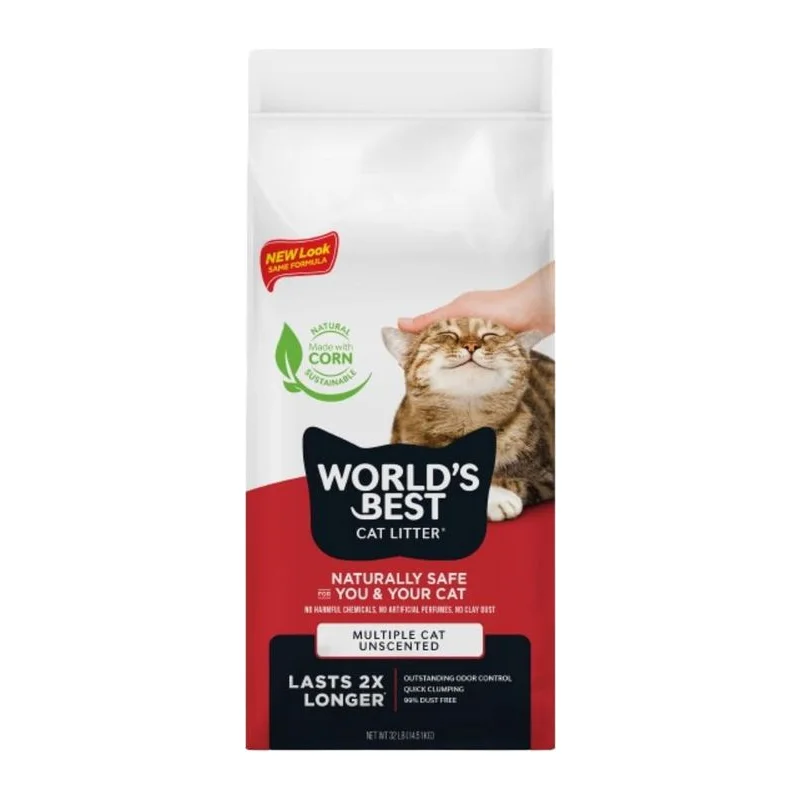
Best Plant-Based Cat Litter
World's Best Cat Litter Multiple Cat Unscented
A clumping litter made from whole-kernel corn, with much less dust than clay, no added fragrance and clumps nearly as firm as a good clay litter.
Buy on AmazonMost plant-based litters clump poorly, which is why many cats and owners give up on them. World’s Best Cat Litter Multiple Cat Unscented is the exception. It is made from whole-kernel corn, it clumps nearly as well as Dr. Elsey’s, and it produces far less dust than any clay. It was Wirecutter’s pick for anyone who wants to avoid clay.
It is also lighter than clay, and a bag lasts a long time because only the wet litter clumps and gets scooped out. The Multiple Cat formula is the unscented version made for busier boxes. There is also a Low Tracking & Dust Control version if tracking is a problem.
Good to know:
- It controls odor less well than clay, especially as it ages. Scoop daily and change it fully every couple of weeks.
- It has a mild, earthy smell of its own.
- Store it dry and sealed. Corn litter that gets damp can grow mold, and a bag left open in a garage can attract mice.
- It is sold as flushable, but see whether you can flush cat litter first.
- It costs about twice as much per pound as Dr. Elsey’s.
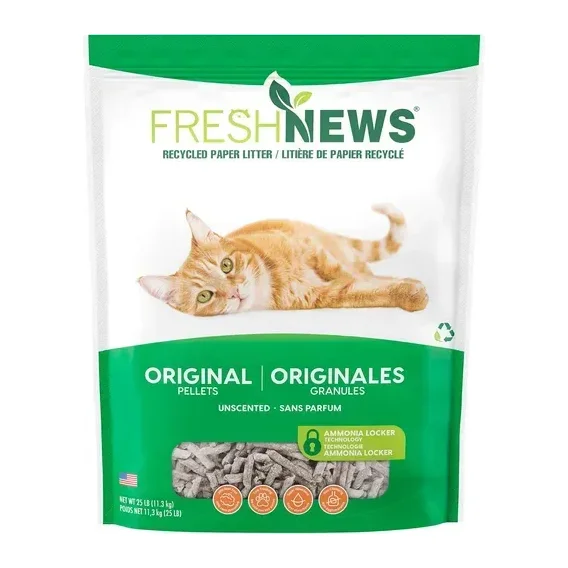
Best for Kittens and After Surgery: Fresh News Paper Pellets
Best Cat Litter for Kittens and After Surgery
Fresh News Original Paper Pellet Cat Litter
Non-clumping pellets of recycled paper with baking soda and no fragrance, practically dust-free and soft, for young kittens and cats recovering from surgery.
Buy on AmazonMost cats prefer clumping litter, but there are two times when a paper litter makes sense. The first is with young kittens, who sometimes eat litter. Whether clumping clay actually harms them is unproven, and veterinarians disagree, but the ASPCA’s foster guidance is to use non-clumping litter for kittens under four months and nursing mothers. The second is after surgery, when clay dust can stick to a fresh incision. Some clinics give the same advice after neutering.
Fresh News is made from recycled paper pressed into pellets, with baking soda for odor and no fragrance. It is practically dust-free and soft underfoot. Purina’s Yesterday’s News, the paper litter many shelters and vets used to recommend, was discontinued in 2022, and Fresh News is the paper pellet that remains easy to find.
Good to know:
- It doesn’t clump. Pellets soften and break down as they absorb urine, so you remove the wet ones and change the whole box often, every few days for a single kitten.
- It controls odor less well than clay.
- Many adult cats raised on fine litter dislike pellets. Treat it as a temporary litter and switch back gradually.
- Ask your vet what to use after surgery. Their advice for your cat comes first.
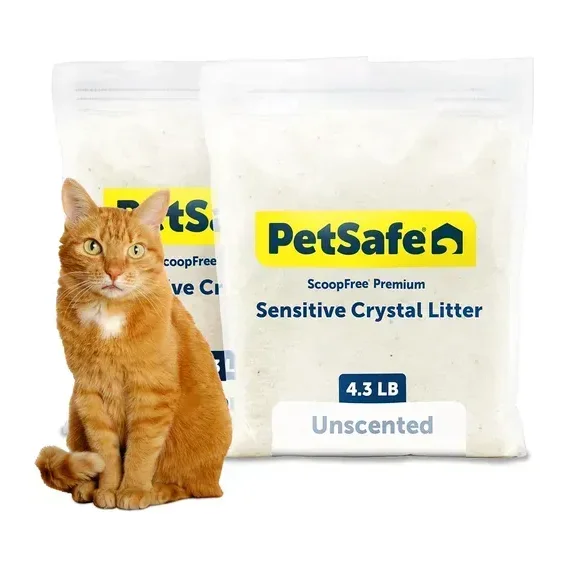
Best Crystal Litter: PetSafe ScoopFree Premium Crystal Unscented
Best Crystal Cat Litter
PetSafe ScoopFree Premium Crystal Litter, Unscented
Unscented silica gel crystals that absorb urine and dry out solids, low in dust and tracking, with each 4.3-pound bag lasting up to a month for one cat.
Buy on AmazonSilica crystal litter works differently from clay. Instead of forming clumps, the crystals absorb urine and lock it in, and they dry out solids so they smell less. PetSafe’s unscented crystals are the ones to choose if you want crystals at all. A 4.3-pound bag lasts up to a month for one cat, according to PetSafe, and the crystals are light, low in dust and track very little.
Good to know:
- It doesn’t clump. You remove solids, stir the crystals daily, and replace them all when they turn yellow or the box starts to smell.
- The crystals can feel sharp to some cats. In preference studies, cats favored clumping clay over crystals, especially for defecating.
- It costs more per pound than any other litter here, although a bag lasts longer.
- The crystals are made of amorphous silica gel, not the crystalline silica found in some industrial dusts.
How Much Litter, and How Often to Change It
Depth. Most advice falls between 2 and 3 inches. The ASPCA says many cats prefer only 1 to 2 inches, the Humane Society suggests about 2, and long-haired cats often prefer shallower litter. Clumping litter needs enough depth to clump before urine reaches the bottom. Start at 2 to 3 inches and adjust to your cat.
Scooping. Scoop at least once a day, and twice if you can. Topping up after scooping keeps the depth even.
Changing. With clumping litter scooped daily, empty the box, wash it with mild soap and hot water, and refill it every two to four weeks. Non-clumping litter, including paper pellets, needs a full change far more often, sometimes twice a week. Avoid strong-smelling cleaners, which can put cats off the box.
Switching. Change litter gradually. Mix a little of the new litter into the old one and increase it over about a week, or put the new litter in a second box next to the old one and let your cat choose.
Can You Flush Cat Litter?
No, even if the bag says you can. Cat feces can carry Toxoplasma, a parasite whose eggs survive sewage treatment. Toxoplasma from cat waste has been linked to deaths among California’s sea otters, which is why California requires litter labels to discourage flushing. Litter can also clog old pipes and damage septic systems. Bag it and put it in the trash. A litter disposal pail keeps the smell in if the bin is far away.
If you are pregnant or have a weakened immune system, the CDC advises having someone else change the litter, or wearing gloves and washing your hands afterward. Scooping daily also helps, because Toxoplasma eggs take one to five days to become infectious.
Is Clay Litter Bad for the Environment?
Clay litter is made from bentonite, which is strip-mined, mostly in Wyoming. Pet litter is now the biggest use of bentonite in the United States, accounting for nearly half of it, according to the US Geological Survey. Used clay litter doesn’t break down in a landfill.
Plant-based litters avoid the mining but come from crops grown with water, fertilizer and land of their own, so none of them is impact-free. If you want to use less clay, the simplest steps are to scoop carefully so you throw away less clean litter, and to try a corn or paper litter if your cat will accept it.
How to Choose
Start with Dr. Elsey’s Ultra Unscented. It is what most cats prefer, it clumps and controls odor as well as litters that cost twice as much, and it is cheap. Choose Boxie Probiotic if several cats share a box or you use an automatic litter box, Tidy Cats LightWeight if you can’t lift a 40-pound bag, and World’s Best if you want to avoid clay or need less dust. Keep Fresh News for young kittens and recovery after surgery.
Whatever you use, a cat that suddenly stops using its box may be ill, not fussy. Urinary problems, constipation and pain can all start as accidents outside the box, so see a vet before you blame the litter.
The litter is only half of it. Our guide to the best litter boxes covers the box itself, and our checklist of everything you need before adopting a cat covers the rest of the setup.