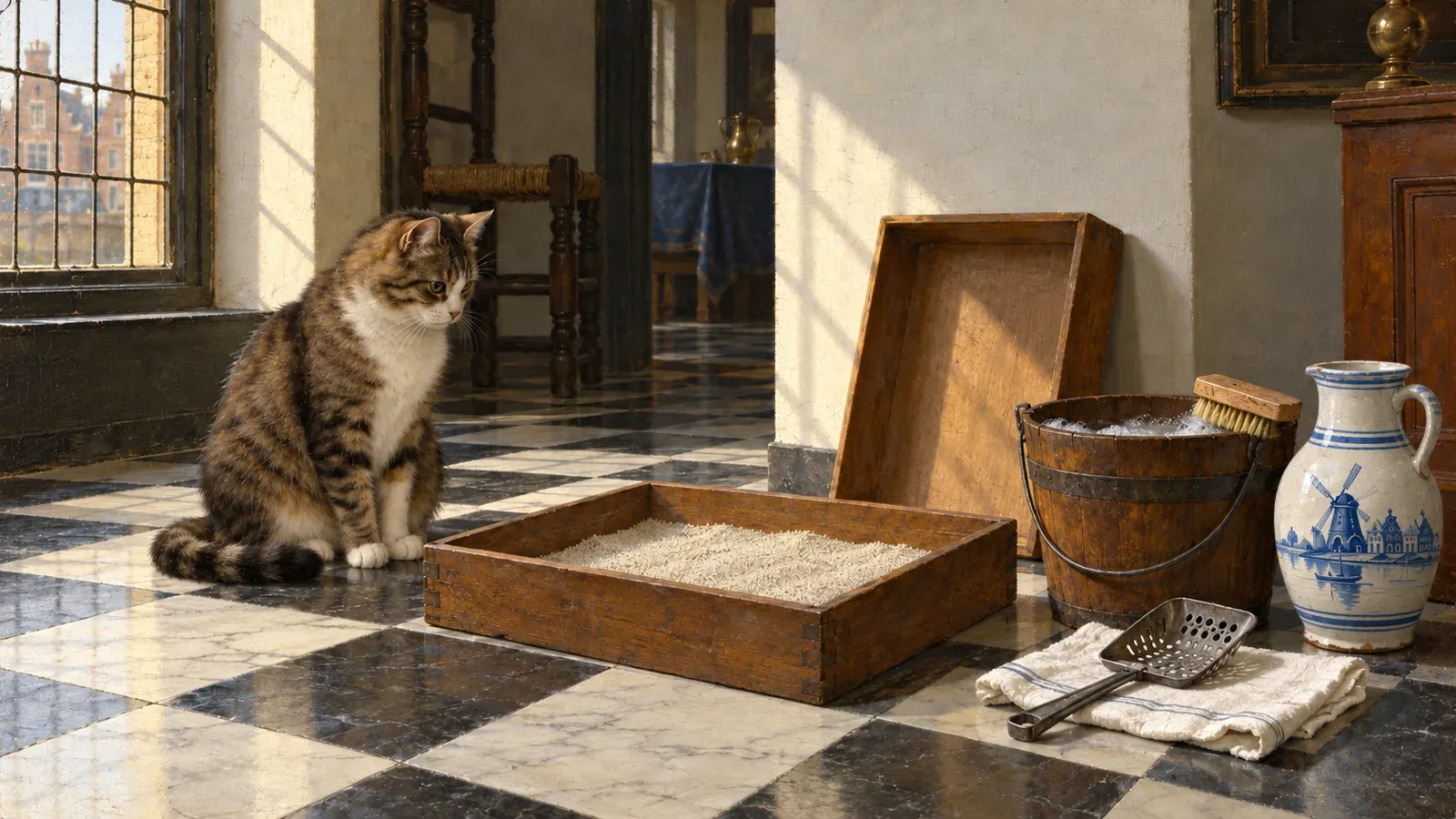
Scoop every day, and change all of the litter every two to four weeks if it clumps, or about weekly if it doesn’t. That’s the short answer, but you’ll find plenty of disagreement beyond it, even among vets and charities. Here’s what they recommend, what the evidence shows, and how to clean the box so your cat keeps using it.
- Scoop at least once a day, and twice if you can.
- Clumping litter: empty the box and refill it every two to four weeks.
- Non-clumping clay or paper pellets: change everything about once a week, or as often as twice a week.
- Wash the box each time you change the litter, with hot water and mild, unscented soap.
- Never use cleaners containing ammonia or phenols. Phenols are toxic to cats.
- Put used litter in the trash, and don’t flush it, even if the bag says you can.
How Often to Change Each Type of Litter
These are starting points for one cat, with the box scooped every day. Change it sooner if the litter looks wet or smells, or if your cat seems reluctant.
| Litter | Change all of it | Good to know |
|---|---|---|
| Clumping clay | Every 2–4 weeks | Humane World says 2–3 weeks; some vets and charities say weekly |
| Non-clumping clay | Once or twice a week | Urine soaks in, so scooping can’t remove it all |
| Paper pellets | Every few days to weekly | Remove wet pellets daily |
| Pine pellets | About weekly, or when most has turned to sawdust | Feline Pine says a 7 lb (3.2 kg) bag lasts about 4 weeks |
| Silica crystals | Every 20–30 days | Stir daily, and change sooner if most crystals discolor |
| Corn or walnut clumping litter | Every 2–4 weeks | Walnut litter’s maker says at least 30 days for one cat |
For clumping litter, International Cat Care says every two to four weeks, and weekly for non-clumping litter. Humane World for Animals says twice a week for clay. It suggests two to three weeks for clumping litter, while VCA Animal Hospitals says the box should be emptied about once a week. Cornell’s Feline Health Center avoids a fixed interval altogether, and says to change litter when it no longer looks and smells clean and dry.
That’s probably the best way to think about it. The other figures are guides, and no study has tested which interval is best. The makers’ figures also come from companies that sell litter, on both sides: frequent changes sell more, and long-lasting claims sell too. Our guide to the best cat litter compares types.
More cats means more often. Cornell notes that more cats need more frequent changes. World’s Best’s own figures for its multi-cat litter drop roughly in proportion to the number of cats, so if you have two cats sharing a box, expect to change it about twice as often. Better still, give them a box each, plus one extra, as the ASPCA and most others recommend.
How Often to Scoop
At least once a day. The ASPCA, VCA Animal Hospitals, Cornell and Humane World all agree on that, and International Cat Care says at least twice a day, and more often for a cat with a medical problem such as kidney disease.
Cats do seem to care. In a 2017 study of 29 cats, they preferred a clean box to a dirty one. What’s surprising is why: odor alone made no difference, but odorless fake urine clumps and feces put them off, and more waste put them off more. So it seems that what they mind is seeing and feeling the mess, which is what scooping removes. The study was funded by Purina and ran at one facility, but it fits the general advice: a box that smells fine to you can still be too dirty for your cat.
A Scoop That Lasts
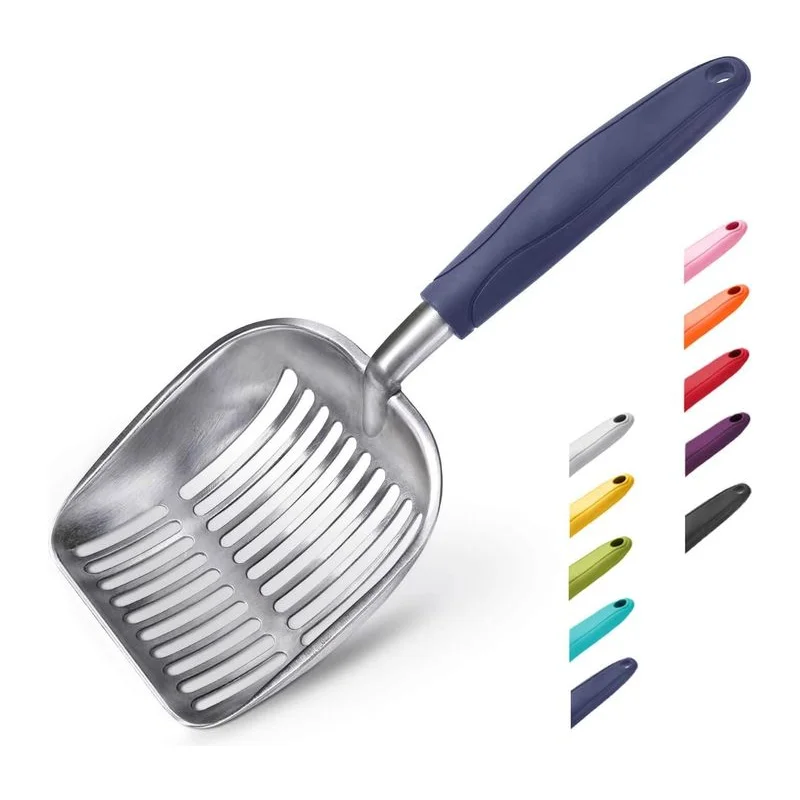
Metal Litter Scoop, Large
A 14-inch (36 cm) aluminum scoop with a 2-inch (5 cm) deep shovel and a long handle. The flat edge lifts stuck clumps, and it doesn't hold smells the way scratched plastic can. More than 13,000 ratings on Amazon, averaging 4.8 stars.
Buy on AmazonA sturdy metal scoop makes the daily job quicker. Top up the litter after you scoop, since clumps take litter with them. Keep it at about 2 inches (5 cm). Sources range from 1 to 2 inches (ASPCA) to 3 to 4 inches on some litter labels, and deeper litter doesn’t mean you can scoop less often. Long-haired cats and older cats often prefer it shallower. If your cat digs happily and doesn’t scatter it all over the floor, the depth is right.
How to Clean a Litter Box
- Put on gloves. Open a window if you can.
- Empty it. Pour the old litter into a bag, tie it, and put it in the trash.
- Wash it. Use hot water and mild, unscented dish soap. A brush helps with stuck-on litter and corners. Use it only for the box.
- Rinse it well. Any leftover smell can put your cat off.
- Dry it completely. Wet clumping litter sticks to the base.
- Refill it. Add fresh litter to about 2 inches (5 cm).
- Wash your hands with soap and water, even after wearing gloves.
The owner handout from the American Association of Feline Practitioners (now the Feline Veterinary Medical Association) says to use only soap and hot water, and to clean every one to four weeks. The ASPCA says weekly, with baking soda or unscented soap. A reasonable rule is to wash the box each time you change all of the litter.
What Not to Use
- Phenols. The CDC says not to use disinfectants with “phenol” in the ingredients, including longer words such as 2-phenylphenol, because they’re very toxic to cats. International Cat Care adds that disinfectants that turn cloudy in water usually contain them.
- Ammonia. It smells like urine and can encourage your cat to go somewhere else. Never mix it with bleach, because that produces toxic gas.
- Citrus oils, strong perfumes and harsh chemicals. These can repel cats, and some may be toxic.
Should You Disinfect It?
For a healthy cat in a healthy home, soap and hot water are generally enough. Sources disagree on bleach: the CDC and Cornell include it, while Best Friends Animal Society says to avoid it. If you want to disinfect, for instance when your cat is sick or someone at home has a weakened immune system, follow the CDC’s method:
- Clean the box with soapy water and rinse it, since bleach doesn’t work well on dirt.
- Mix 2 oz (1/4 cup, about 60 mL) of household bleach into 1 gallon (3.8 L) of water.
- Soak the box, or wipe it and leave it wet, for at least 10 minutes.
- Rinse it thoroughly, and let it dry.
Don’t count on bleach to deal with toxoplasma, though. See below.
When to Replace the Litter Box
Scratches in plastic hold bacteria and smells. VCA says that a box used for several years may hold a smell, and to replace it. That’s the only advice on this we found from a veterinary source. You’ll also see “replace it every year”, but that’s a rule of thumb with no evidence behind it. Our advice: if the box still smells after a good wash, or is deeply scratched, it’s time. A University of Georgia vet notes that stainless steel boxes resist bacteria better, but that this level of hygiene isn’t necessary at home. Our guide to the best litter boxes has our picks.
Do Liners, Scents and Baking Soda Help?
Liners: skip them. The ASPCA, International Cat Care, Humane World and Best Friends all advise against them. Claws catch on the plastic, and many cats dislike them. They also tend to tear, so they don’t save as much work as you’d hope.
Scented litter and deodorizers: skip them too. Nearly every vet source advises against them, as they can overwhelm a cat’s sense of smell. The research is mixed, though: one study linked scented litter to house soiling, and another found no link. Either way, it isn’t worth the risk, and a perfume can hide a smell that means it’s time to clean.
Baking soda: harmless, but unproven. Humane World says a light layer under the litter can help control odors. We found no good evidence that it reduces smell. A small shelter study found cats used boxes with carbon more than those with bicarbonate, but it was funded by a maker of carbon litter.
Air purifiers: we found no independent research on them for litter boxes, only sellers’ claims. Scooping, more boxes and an open room are better places to start.
How to Dispose of Used Litter
Put it in the trash. Tie it in a bag. A pail can cut down on trips to the outside bin, and the maker of the Litter Genie says one holds up to two weeks of litter for one cat.
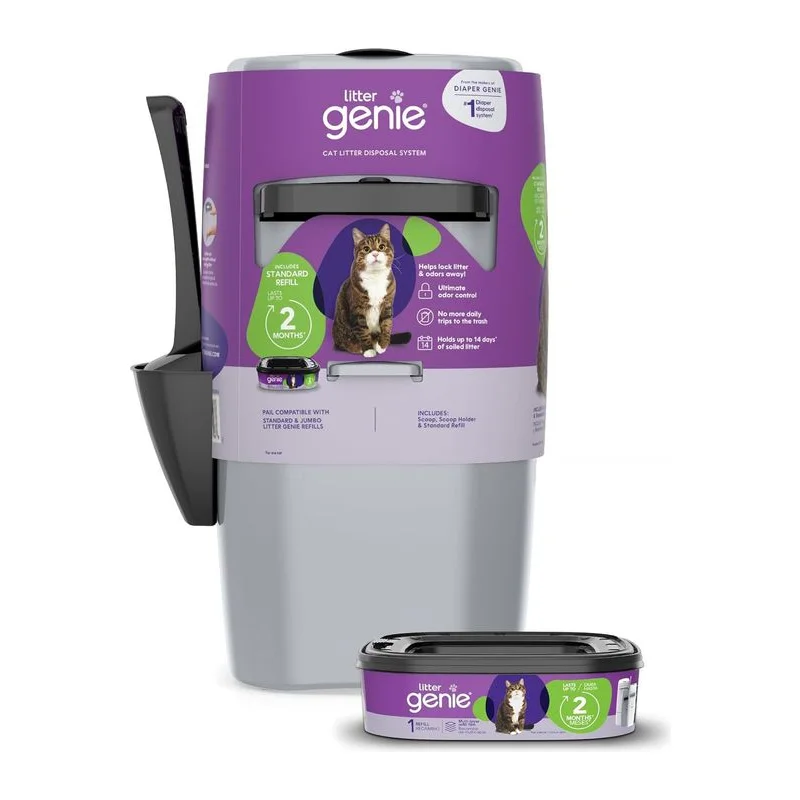
Fewer Trips to the Trash
Litter Genie Disposal Pail
A small pail with a multi-layer bag that seals in smells. You drop clumps in and pull the handle, and the maker says it holds up to 14 days of litter for one cat. More than 12,000 ratings on Amazon, averaging 4.6 stars.
Buy on AmazonDon’t flush it. Makers including Fresh News and Fresh Step say not to, and clay and crystals can block drains. Some corn and wheat litters are sold as flushable, within limits. We’d still avoid it. Cat feces can carry toxoplasma, which sewage treatment may not kill, and California requires litter sold there to carry a warning against flushing, citing deaths among sea otters. Runoff may matter more than toilets in that case, but there’s no good reason to add to the risk.
Don’t compost it, at least not where you grow food. A University of Guelph veterinarian warns that a home compost pile may not get hot enough to kill germs and parasites, and that it can increase exposure to toxoplasma in the garden. Don’t dump litter outside or in storm drains either.
Who Shouldn’t Scoop
Toxoplasma is a parasite that some cats shed in their feces, usually for only a couple of weeks in their lives. The CDC says it takes one to five days to become infectious after a cat passes it, which is one more reason to scoop daily.
If you’re pregnant or have a weakened immune system, the CDC says someone else should clean the box. If there’s nobody else, scoop every day, wear disposable gloves, throw them away, and then wash your hands. There’s no need to give up your cat, which is far from the only way people catch toxoplasmosis.
Bleach isn’t a reliable answer here. Research on the parasite’s oocysts shows that they’re tough, and that bleach only strips away their outer wall. VCA suggests boiling water for boxes, and International Cat Care scalding water, which may warp thin plastic. Check that your box can take it first.
Everyone should wash their hands after scooping. Keep children away from the box, and if the dust bothers you, try a low-dust litter and scoop gently.
What the Litter Box Tells You About Your Cat’s Health
You see your cat’s waste every day, so you may be the first to notice a problem. Cats Protection says it’s normal for a cat to urinate two to four times a day and poop once or twice. Learn what’s normal for yours.
Go to a vet now if your cat is straining and passing little or no urine. Cornell calls a urethral blockage an absolute emergency, needing immediate treatment. It’s more common in male cats and can kill.
Call your vet soon if you see:
- Bigger or more frequent urine clumps than usual, which PetMD says can point to diabetes or kidney disease.
- Lots of small clumps, or blood in the urine.
- No stool for more than 48 hours in an adult or 24 hours in a kitten, or diarrhea for more than 24 hours in an adult. Any diarrhea in a kitten, or black or bloody diarrhea, needs a call too. These figures come from Cats Protection.
- Your cat starts avoiding the box, crying while using it, or going elsewhere.
A cat that perches on the rim, leaves quickly or goes near the box instead of in it may not like the box. Clean it, and check the depth and litter. If that doesn’t help within a few days, see your vet, as house soiling is often medical. To clean any accidents, use a proper enzyme cleaner. See our guide to the best enzyme cleaners for cat urine.
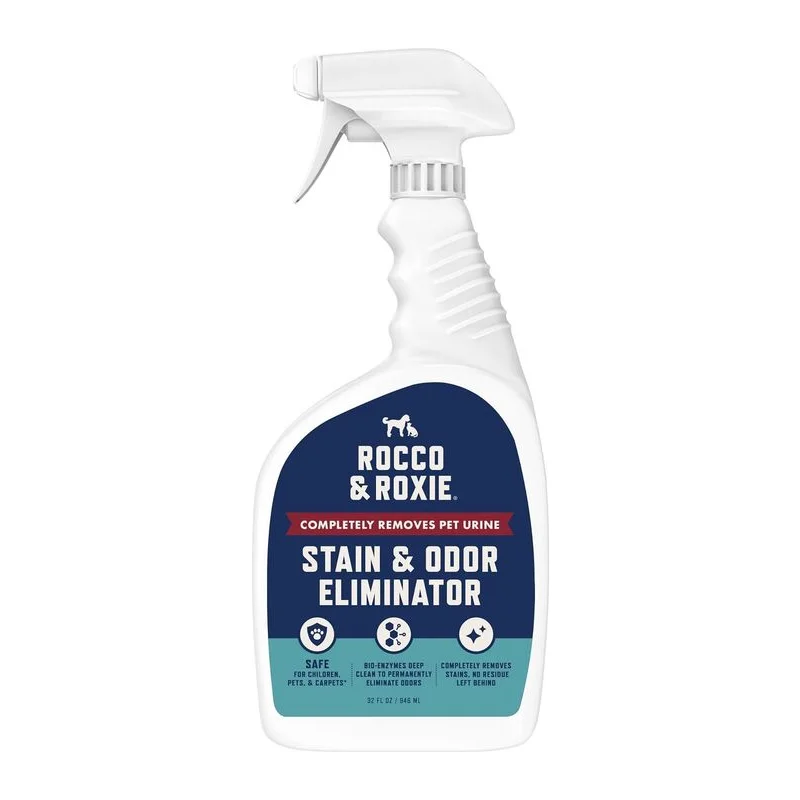
For Accidents Around the Box
Rocco & Roxie Stain & Odor Eliminator
An enzyme cleaner for urine, feces and vomit on carpets, floors and furniture. Our pick for cat urine.
Buy on AmazonWhat About Self-Cleaning Boxes?
They scoop for you, but they don’t do all the cleaning. Whisker’s support page for the Litter-Robot 4 suggests emptying the drawer about once a week with one cat and twice a week with two, and a deep clean every three months with one cat, or monthly with four. The Litter-Robot’s maker says not to use bleach on the base. PetSafe’s ScoopFree crystal trays last up to 30 days with one cat. Follow the manual for your model, and see our guide to the best self-cleaning litter boxes.
Changing Cat Litter in Short
Scoop every day, and twice if you can. Change clumping litter every two to four weeks, non-clumping litter about every week, and sooner whenever it looks or smells wet. Wash the box each time with hot water and unscented soap, avoid ammonia and phenols, and skip liners and scented products. Put the used litter in the trash, and have someone else scoop if you’re pregnant or have a weakened immune system. And check what’s in the box as you scoop: a cat straining and passing no urine needs a vet right away. For a new kitten, see how to litter train a kitten.