Most cats would rather you left their paws alone, and many owners put off trimming their cat’s nails because the first attempt ended in a wrestling match. It doesn’t have to. Trimming a cat’s nails takes a minute once your cat is used to it, and getting there is mostly a matter of going slowly: one or two claws at a time, a treat after each, and never cutting more than the sharp tip.
Here’s the short version:
- Trim every two to four weeks if your cat lives indoors, or whenever you hear claws clicking on the floor or catching in fabric.
- Use proper cat clippers. A small scissor-style clipper like the Pet Republique suits most cats.
- Take only the sharp, clear tip, well short of the pink quick.
- Go slowly. Get your cat used to having its paws handled first, and stop after a claw or two if it starts to object.
- Keep styptic powder nearby in case you cut too far.
How Often to Trim Your Cat’s Nails
There’s no single schedule, because it depends on the cat. US vets and shelters mostly suggest a routine trim. Humane World for Animals recommends trimming every two to three weeks, Fear Free’s guide every 10 days to two weeks, and VCA Animal Hospitals every two to four weeks for indoor cats.
UK cat charities take a lighter approach. International Cat Care points out that cats need sharp claws to climb, play and defend themselves, and that most keep their claws in shape by scratching, so it doesn’t advise routine trimming for cats that manage on their own. Both views agree on who needs help most:
- Indoor cats, which scratch and climb less than cats that go outside.
- Older cats, which scratch less, so their claws grow thick and long.
- Kittens, whose claws are needle-sharp and grow fast, and who are easiest to train to accept trims.
- Polydactyl cats, whose extra toes can have claws that never touch a scratching surface.
Outdoor cats usually wear their claws down and need them for climbing, so trim theirs only if they’re overgrown. Whatever kind of cat you have, check its claws every couple of weeks. They’re too long if you can hear them tapping on a hard floor, if they catch on carpet, bedding or your clothes, or if you can see them sticking out while your cat is relaxed.
What You’ll Need
- Cat nail clippers. Scissor-style clippers with a small notch in each blade are the easiest to control on a cat’s thin, curved claws. Guillotine and plier types work too, but are made more with dogs in mind. Cats Protection advises against human nail clippers, which can split the claw. Replace clippers when they get dull, because a dull blade crushes the claw instead of cutting it.
- Treats your cat loves, ideally something soft and smelly it only gets at trimming time. The ASPCA suggests tuna, salmon, chicken liver or cheese.
- Styptic powder, or plain cornstarch or flour, to stop bleeding if you nick the quick.
- A towel, if your cat wriggles.
- Good light, so you can see the quick.
Find the Quick
A cat’s claw has a pink core called the quick, which contains blood vessels and nerves. Cutting into it hurts and bleeds, and a cat that has had its quick cut once will remember it next time. The goal is to take off only the sharp, hooked tip beyond it.
Most cat claws are clear or white, so the quick is easy to see as a pink triangle inside the claw. Hold the paw up to the light and you’ll see where it ends. On a dark claw, you can’t see the quick, so take off only the very tip, where the claw starts to curve downwards into a hook.
How much is that? Fear Free’s guide suggests about 1/16 of an inch (1.5 mm) off the very tip, and the ASPCA says to set the clippers about halfway between the quick and the tip, and take only the sharp point at first. If in doubt, cut less. You can always take a little more next time.
How to Trim Your Cat’s Nails, Step by Step
- Pick a calm moment. A sleepy cat after a meal is far easier than a cat that wants to play. Sit somewhere comfortable with your cat on your lap, facing away from you, or on a table or the floor in front of you.
- Hold a paw. Take one front paw gently in your hand. If your cat pulls away, let go, offer a treat and try again later.
- Extend a claw. Press lightly on the toe pad from below, with your thumb on top of the toe just behind the claw. The claw will slide out.
- Look for the quick. Find the pink part, and line the clippers up well beyond it.
- Cut the tip. Hold the clippers so they cut from top to bottom, not side to side, which can splinter the claw. VCA’s advice is to make a few small cuts rather than one big one if you’re unsure.
- Reward. Give a treat after every claw while your cat is learning, and after every paw once it’s used to it.
- Stop while it’s going well. You don’t have to do all 18 claws in one go. If your cat starts flicking its tail, flattening its ears or pulling away, stop for the day and finish another time.
Back claws grow more slowly than front ones and are usually less sharp, and most cats object to them more. Start with the front paws, and do the back ones on a different day if your cat has had enough.
If Your Cat Won’t Let You
A cat that fights every trim usually needs to learn that paw handling is no big deal before it sees a clipper. The ASPCA suggests spending at least a month on this:
- Start with touch. While your cat is relaxed, touch a paw for a second, then give a treat. Over a few days, build up to holding a paw for three seconds, then to pressing a toe so a claw comes out. A handful of repetitions a session is plenty.
- Introduce the clippers. Leave them out near your cat’s favourite spot. Then hold them near a paw, squeeze them so your cat hears the click, and reward.
- Trim one claw a day. Fear Free’s guide suggests trimming one nail a day for the first few weeks. Your cat’s claws stay short, and every session ends before it gets cross.
Use a towel if you need to. International Cat Care suggests wrapping a wriggly cat snugly in a towel with one leg free, which many cats find calming. A second person who holds and strokes the cat while you trim makes it much easier, too.
Know when to let a professional do it. If your cat is frightened, lashes out, or you’ve made no progress after a few weeks, ask your vet or a cat groomer. Many vet clinics trim claws for a small fee, and will show you how. For very anxious cats, a vet can prescribe medication to calm them before a trim.
If You Cut the Quick
It happens to almost everyone sooner or later. The claw will bleed, and your cat will probably pull away. Stay calm:
- Press styptic powder onto the tip of the claw. If you don’t have any, Humane World for Animals suggests cornstarch, or rubbing the claw on a dry bar of soap.
- Hold gentle pressure on the tip for a minute or so, until the bleeding stops.
- Leave the other claws for another day, and give your cat a treat and some space.
A nicked quick usually stops bleeding within a few minutes. If it keeps bleeding, or the toe later looks swollen or sore, call your vet.
Dewclaws, Older Cats and Overgrown Claws
The dewclaw is the “thumb” claw on the inside of each front leg, a little way up from the paw. It never touches the ground or a scratching post, so it doesn’t get worn down. Check it every time you trim, because it’s the claw most likely to grow too long.
Older cats often scratch less, and International Cat Care notes their claws can become thick and overgrown, and may even grow into the pads, which is painful and can get infected. Check an older cat’s claws every week or two. A horizontal scratcher helps, since a stiff older cat may find it easier than a tall post.
If a claw has curled into the pad, or the toe is swollen, red or bleeding, don’t try to fix it at home. Take your cat to a vet, who can cut the claw and treat the pad safely.
The Best Cat Nail Clippers
We compared small clippers for cats on blade quality, how easily you can see the claw while cutting, how they feel in the hand, and what owners report after months of use. These three cover most cats and most owners.
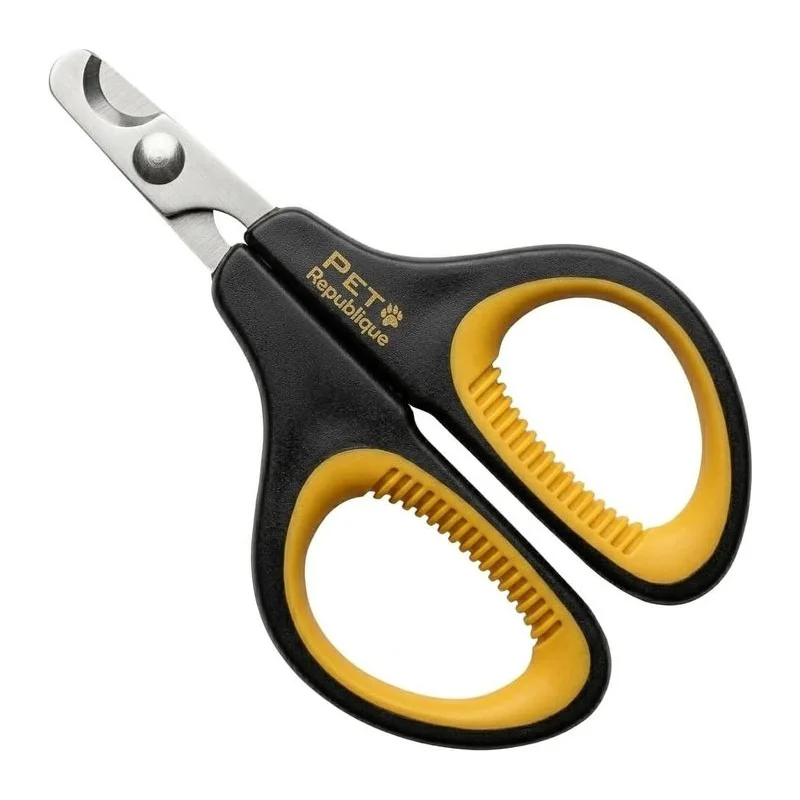
Best Overall
Pet Republique Cat Nail Clipper
A small scissor-style clipper with stainless steel blades with a curved notch that cradles the claw, and soft, large finger loops. One of Amazon's best-selling cat clippers, with more than 30,000 ratings.
Buy on AmazonThe Pet Republique Cat Nail Clipper is the clipper we’d hand a first-time owner. It’s a small scissor-style clipper, about 4.7 inches (12 cm) long, with a curved notch in each stainless steel blade that holds a cat’s claw in place while you cut. The finger loops are large and covered in grippy rubber, so it’s comfortable and steady even in bigger hands. The short blades give you a clear view of the claw, so you can see where the quick is before you squeeze.
It’s cheap, and the maker says the thick stainless steel blades stay sharp for years. It has more than 30,000 ratings on Amazon, averaging 4.6 stars. It suits kittens and adult cats; for a large cat with thick, overgrown claws, a vet or groomer is a better first step.
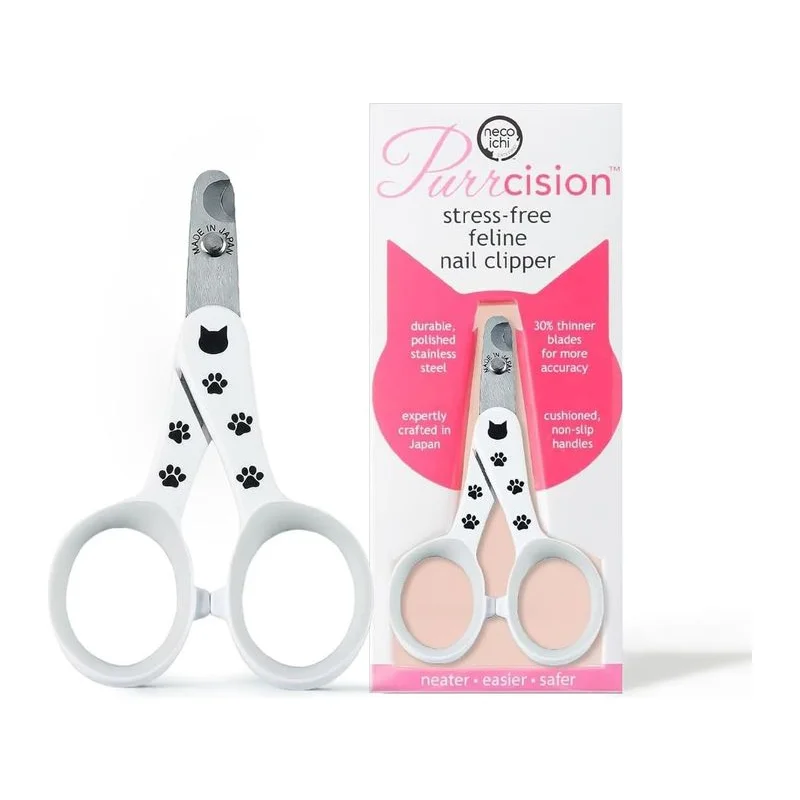
Best Upgrade
Necoichi Cat Nail Clipper
A scissor-style clipper made in Seki, Japan, with a blade the maker says is 30% thinner than a standard cat clipper, for a clearer view of the quick and a clean cut. In white, gray, lilac and mint.
Buy on AmazonIf you’d like something a step up, the Necoichi Cat Nail Clipper is made in Seki, a Japanese city famous for its knives. Necoichi, a Japanese cat-products brand, says its blade is 30% thinner than a standard cat clipper’s. A thin blade blocks less of your view, so it’s easier to see exactly where you’re cutting, and a sharp, finely ground edge cuts cleanly in one stroke rather than crushing or splitting the claw.
It’s slightly smaller than the Pet Republique, at about 3.8 inches (9.6 cm) long, which suits smaller hands. It costs more, but it’s rated 4.8 stars on Amazon from more than 2,500 ratings.
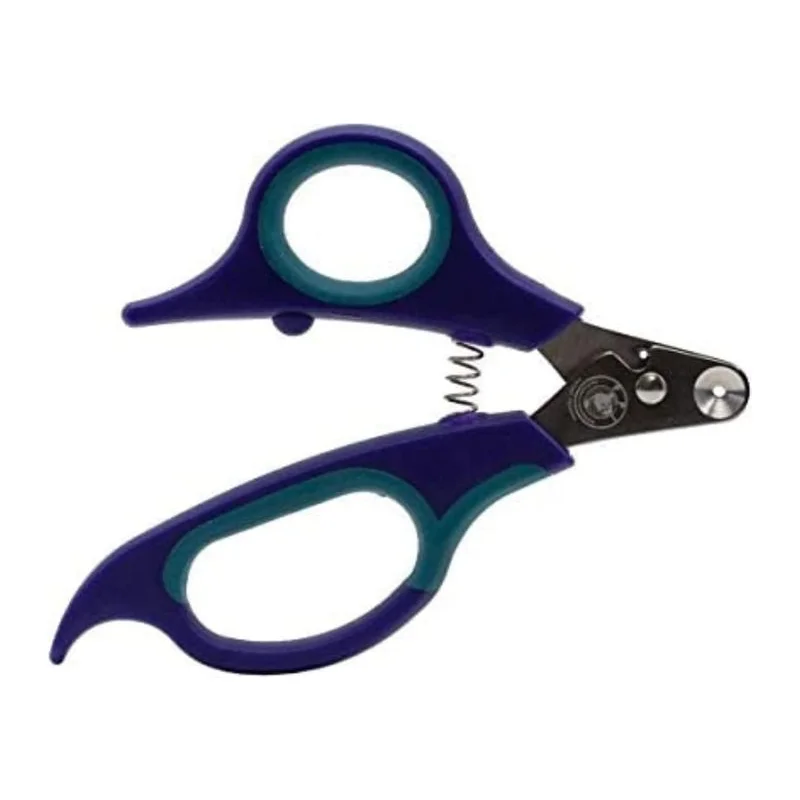
Best for Nervous Beginners
Zen Clipper Cat Nail Clipper
A clipper with a conical blade over a 2 mm hole. You push the claw tip into the hole and squeeze, and it trims only what sticks through, so it's hard to take too much.
Buy on AmazonIf the fear of cutting the quick is what stops you, the Zen Clipper is built around it. Instead of open blades, it has a conical blade over a small round hole. You slide the tip of the claw into the hole and squeeze, and it trims off only the part that sticks through. The extra-small size, with a 2 mm hole, fits most adult cats, and Zen Clipper sells other sizes and offers a free sizing card if you’re unsure.
The trade-off is that it only ever takes a tiny bit, so it suits regular trims of claws that are already a normal length, not long overgrown ones. It’s especially handy on dark claws, where you can’t see the quick anyway.
Also Worth Having

For Nicked Quicks
Miracle Care Kwik Stop Styptic Powder
A small tub of styptic powder that stops minor bleeding from a cut claw in seconds, with benzocaine to numb the sting. Used by vets and groomers.
Buy on AmazonStyptic powder. Keep a tub of Kwik Stop with your clippers. It stops bleeding quickly, contains benzocaine to numb the sting, and has more than 37,000 ratings on Amazon. Dab a little on the tip of the claw with a damp cotton swab and hold it there for a few seconds. A small 0.5-ounce (14 g) tub lasts years at home.
An Option for Some Cats
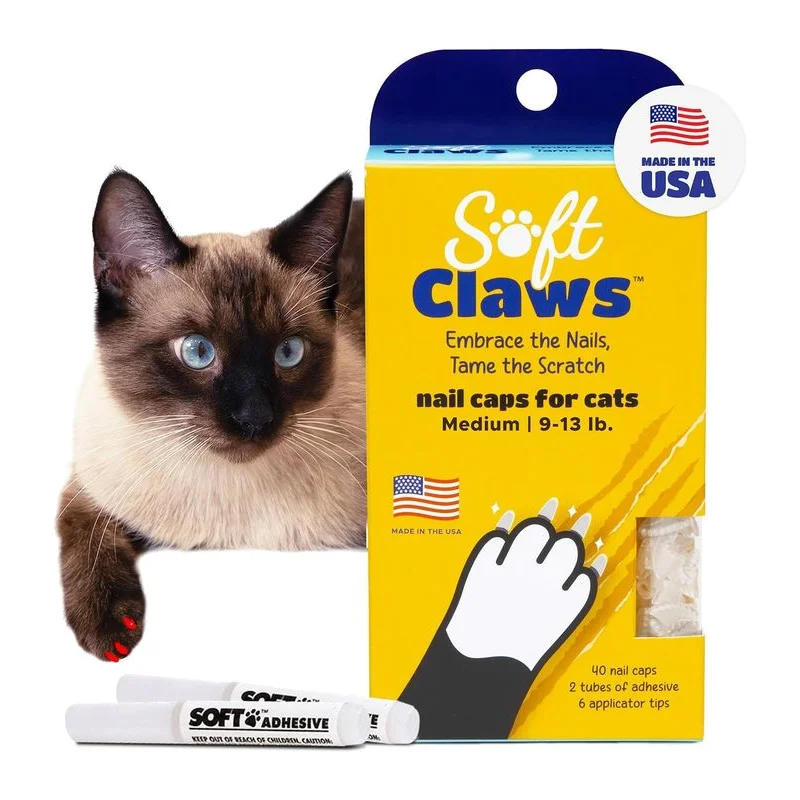
Soft Claws Nail Caps for Cats
Forty soft vinyl caps and two tubes of adhesive. Each cap is glued over a trimmed claw and falls off with the claw's outer layer after a few weeks. The medium size is for cats of about 9–13 pounds.
Buy on AmazonNail caps. Soft vinyl caps like Soft Claws are glued over trimmed claws so a cat can’t scratch furniture or skin, and fall off as the claw grows, usually after four to six weeks. The Feline Veterinary Medical Association (formerly the American Association of Feline Practitioners) lists them among the humane alternatives to declawing, though it notes that some cats resent having them fitted and some pull them off. UK cat charities are more critical: Cats Protection advises against them, because a cat with caps can’t fully retract its claws, scratch properly or groom normally.
Our view: caps can help in a specific situation, such as a cat that scratches a person with fragile skin, but they’re not a substitute for trims and a good scratching post. If you try them, use the right size, fit them over freshly trimmed claws, and watch how your cat copes for the first few days.
Give Your Cat Somewhere to Scratch
Trims make claws less sharp, but they don’t change a cat’s need to scratch. Scratching sheds the old outer layer of the claws, stretches the body and leaves scent marks. Give your cat a sturdy scratching post at least as tall as it is when stretched out, and put it next to the spot it already scratches. Cornell’s Feline Health Center suggests rewarding your cat when it uses the post. A cat tree with sisal-wrapped posts does the same job and gives it somewhere to climb; see our guide to the best cat trees.
Don’t consider declawing. It isn’t a manicure: it amputates the last bone of each toe. The Feline Veterinary Medical Association strongly opposes elective declawing, and it’s banned in the UK and much of Europe. Trims, a scratching post and patience solve the problem without it.
Trimming a Cat’s Nails in Short
Check your cat’s claws every couple of weeks, and trim them every two to four weeks if they’re getting long, which is most likely in an indoor, older or polydactyl cat. Use small cat clippers, cut only the sharp tip well short of the pink quick, and do one or two claws at a time with a treat after each until your cat accepts the whole paw. Keep styptic powder handy, check the dewclaws, and let a vet take over if a claw has grown into the pad. If your cat is new, our checklist of everything you need before adopting a cat covers the rest of the essentials.