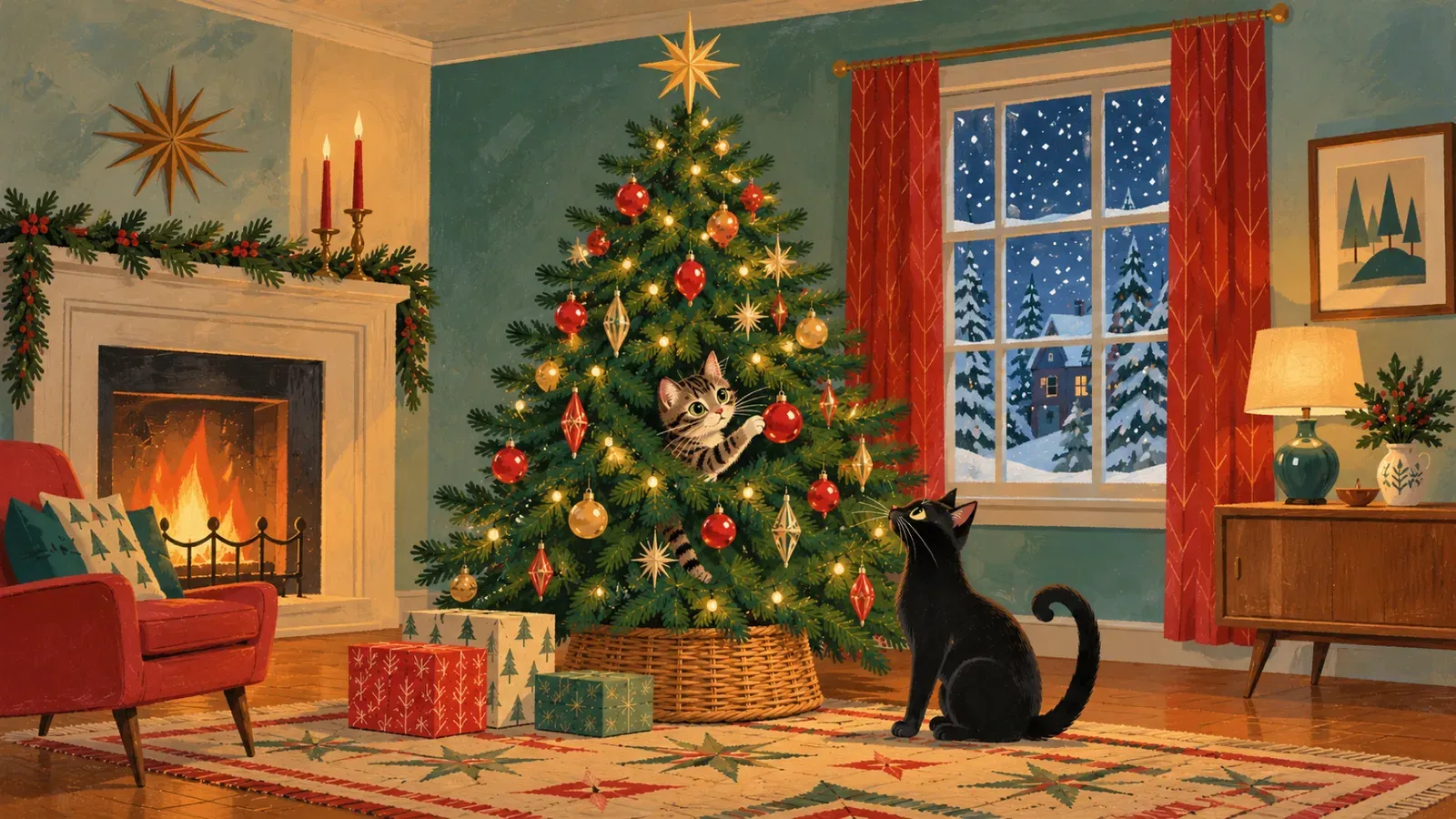
To a cat, a Christmas tree is a gift. Overnight, a new tree appears in the living room, smelling of the outdoors, with branches to climb, lights that glint and dozens of small shiny things that swing when you touch them. It’s no wonder so many cats spend December batting ornaments off the lower branches, climbing to the top, or bringing the whole thing down.
You can’t explain to a cat that the tree is off limits, but you can make it safe, steady and a lot less interesting. Once the tree stops rewarding them, most cats lose interest. Here’s what works:
- Anchor the tree so it can’t fall, with a heavy stand like the Krinner Tree Genie and a line to the wall.
- Put it up bare for a few days, so the novelty wears off before the decorations go on.
- Decorate from the top down, with shatterproof ornaments on the lower branches, and leave out the tinsel.
- Cover the stand and water with a tree collar.
- Protect the cords with a split cord protector, and switch the lights off when you go out.
- Make the area around the tree unappealing with double-sided tape, foil or a carpet runner.
- Give your cat somewhere better to climb, away from the tree.
Why Cats Go for the Tree
Cats are climbers, and they like a high place to watch the room from. A tree is the tallest, most climbable thing most homes ever have indoors, and it arrives with a strong new smell that a cat will want to investigate. Decorations add to the appeal: anything that dangles and moves when it’s touched looks a lot like a toy.
Kittens and young cats are usually the worst offenders, because everything new is worth exploring. Older cats often sniff the tree, decide it’s furniture, and ignore it.
Know What’s Dangerous
A cat in the tree is mostly a nuisance, but a few parts of Christmas can make a cat seriously ill. These matter most:
- A falling tree. A cat climbing a top-heavy tree can pull it over onto itself. The ASPCA advises making sure the tree is tightly secured so it can’t tip over.
- Tinsel and ribbon. Cats love to play with them and often swallow them. Pet Poison Helpline calls tinsel a common cause of bowel obstruction in cats, and warns that a swallowed ribbon can pull tight in the intestine and cut it, which usually means surgery.
- Glass ornaments. They shatter easily, and shards can cut a cat’s paws, mouth and digestive tract.
- Lights and cords. A cat that chews through a cord can be electrocuted. Signs include burns in the mouth and difficulty breathing.
- Tree water. Stagnant water in the stand is a breeding ground for bacteria, and any preservatives or plant food added to it can make a cat sick.
- Needles and sap. Pet Poison Helpline says pine oils, sap and needles can cause nausea, vomiting, skin irritation or injury to the stomach. If your cat gets sap on its fur, wash it off before your cat licks it off.
- Festive plants. All true lilies can cause kidney failure in cats, even from a small amount of pollen or the water in the vase. Holly and mistletoe are poisonous too, and poinsettias can cause a mild to moderate upset stomach, according to the ASPCA and Cats Protection. Keep lilies out of a home with cats altogether.
Pick the Right Tree and the Right Spot
Consider an artificial tree. Pet Poison Helpline suggests an artificial tree for cat owners, because it has no sap, needles or water for a cat to swallow. If you love a real tree, the rest of this guide still applies, and covering the water matters even more.
Keep it away from launch pads. A cat that can jump into the middle of a tree from a sofa, shelf or windowsill will. Stand the tree in open floor space, ideally in a corner, with nothing nearby your cat can leap from.
Think about the room. The surest way to keep a cat away from a tree is a door. If you have a room you can close when you’re out or asleep, put the tree there. A smaller tree on a table in that room is easier still.
Anchor It So It Can’t Fall
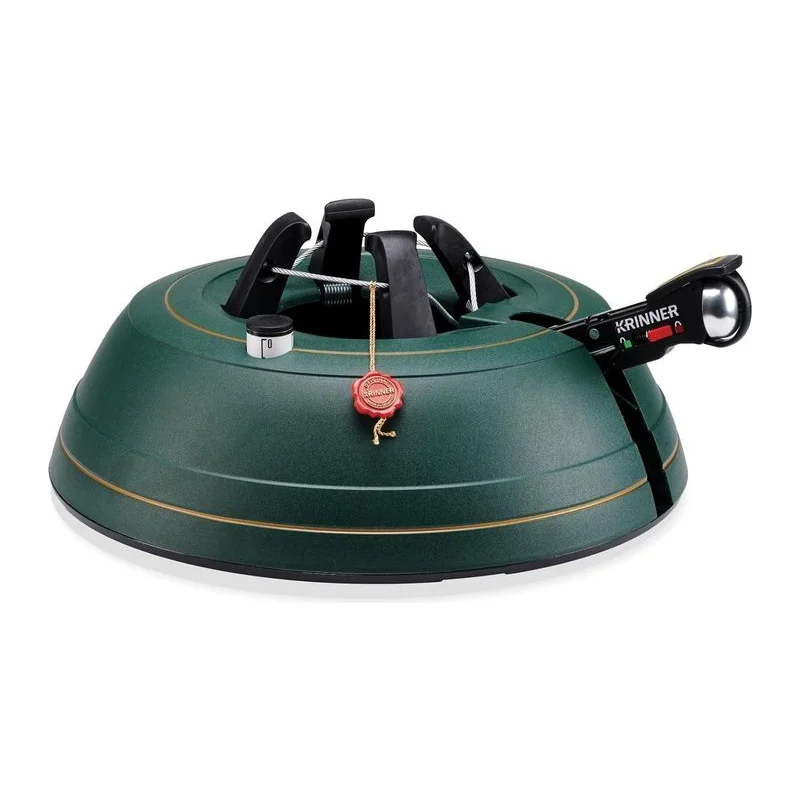
Best Stand for a Real Tree
Krinner Tree Genie Tree Stand
A wide, heavy stand that grips the trunk with five claws, locks with a foot pedal, and holds 1.2 gallons of water. The medium size fits trees up to 7 feet.
Buy on AmazonA stable base is the first line of defense. The Krinner Tree Genie is the stand we’d choose for a real tree. Instead of screws that loosen as the trunk dries out, five claws close around the trunk on a single cable when you pump the foot pedal, so the grip is even all the way round and the tree stands straight. The wide base resists tipping, the 1.2-gallon (4.5 L) reservoir means less topping up, and a gauge shows when it needs water. The medium size takes trees up to 7 feet (2.1 m) tall with a trunk up to 4.7 inches (12 cm) across, and there’s an XL version for trees up to 10 feet.
An artificial tree comes with its own stand, so check that its legs sit flat and fully open, and weigh the base down if it feels light.
Then tie the top to the wall. Pet Poison Helpline recommends securing a tree at the top as well as the bottom. Put a small screw eye or an adhesive hook into the wall or window frame behind the tree, about two-thirds of the way up, and run clear fishing line from it around the trunk. A cat climbing the tree can then shake it but can’t pull it over.
Put It Up Bare for a Few Days
If you can, put the tree up a few days before you decorate it. A bare tree is still new and still climbable, but it has nothing to bat at or chew. Your cat gets to investigate it, find out it doesn’t do much, and get used to it being there. When the decorations go on, the tree is already old news.
If your cat does climb it in this time, calmly lift it down and offer a toy or a treat somewhere else. Shouting or chasing can make the tree more exciting, or make your cat nervous in its own home.
Decorate From the Top Down
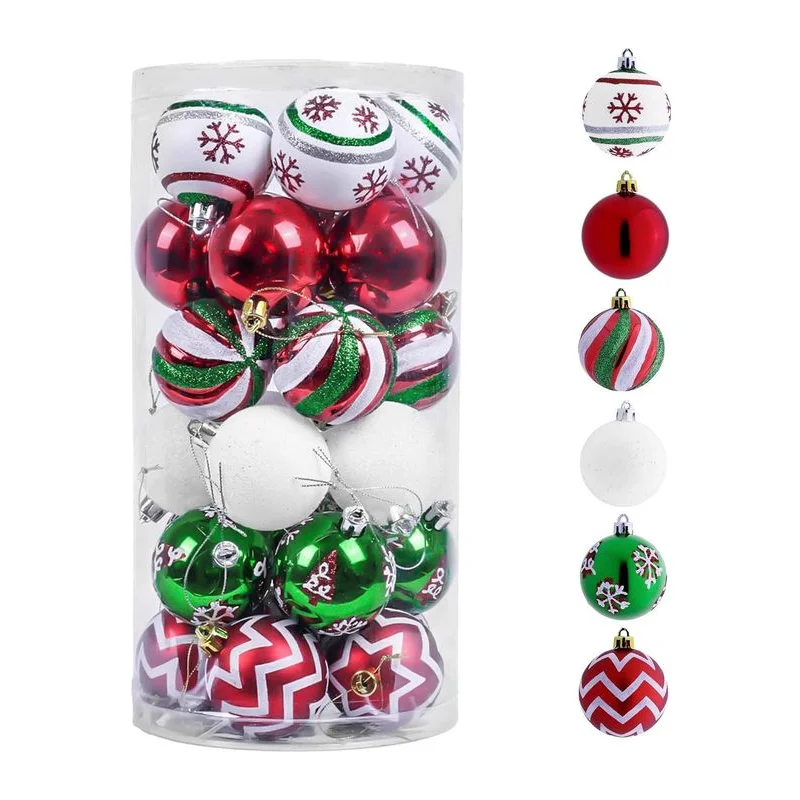
Best Ornaments for the Lower Branches
Valery Madelyn Shatterproof Christmas Ornaments, 30 Count
Thirty 2-inch plastic ornaments in red, green and white, in shiny, matte and glitter finishes, made to survive a drop of about 6.5 feet onto a hard floor.
Buy on AmazonCats Protection’s advice is to hang decorations closer to the top of the tree, away from paws, and to avoid glass baubles. In practice:
- Keep the lowest branches plain, or give them unbreakable ornaments you don’t mind losing. Shatterproof plastic sets like the Valery Madelyn 30-count set look like glass baubles from across the room, and the maker says they survive a drop of about 2 meters (6.5 feet) onto a hard floor.
- Save glass, heirloom and edible ornaments for the top, or for a high shelf or a garland out of reach.
- Skip the tinsel. It’s the decoration most likely to send a cat to the vet. If you want sparkle, use lights or shiny ornaments instead.
- Hang ornaments securely. Close the hooks around the branch with pliers, or use ribbon tied in a knot, so an ornament has to be pulled hard to come off. Loose wire hooks fall out and can be swallowed.
- Don’t put cat presents under the tree. Cats Protection warns that toys and treats, especially anything with catnip, will only draw your cat in.
Cover the Stand and the Water
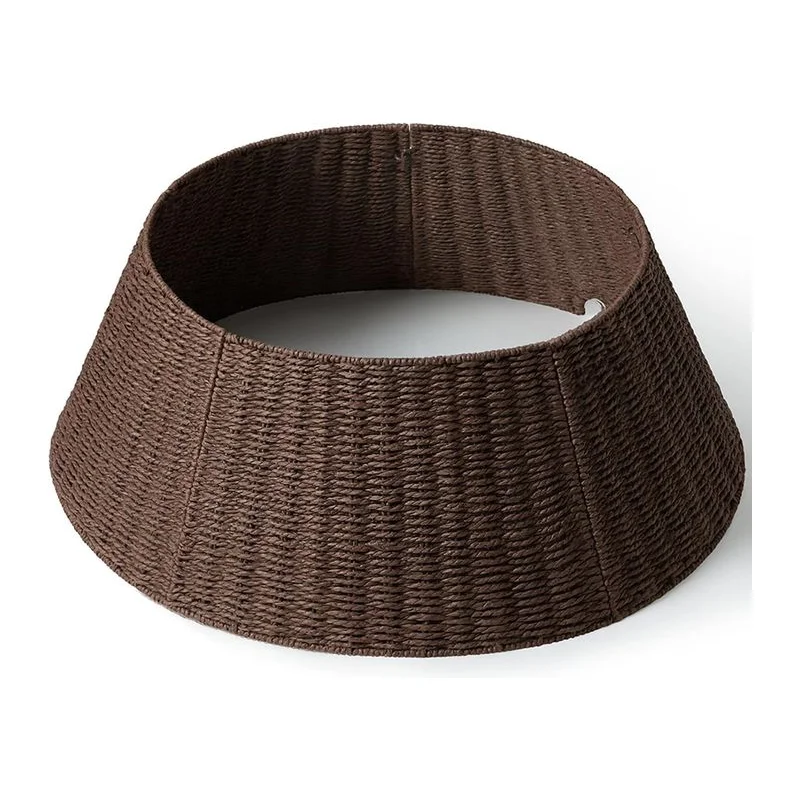
Best Way to Hide the Stand
Rustic Farmhouse Woven Christmas Tree Collar
A 10-inch-tall woven collar, 28 inches across at the bottom and 20 at the top, that hides the stand and blocks the water from the side. In brown, natural or black.
Buy on AmazonA tree skirt hides the stand, but a cat can walk straight under it to the water. A tree collar is a rigid ring that sits around the stand instead. The Rustic Farmhouse Woven Tree Collar is 10 inches (25 cm) tall, 28 inches (71 cm) across at the bottom and 20 inches (51 cm) at the top, which hides most stands and blocks the water from the side, while leaving the top open so you can still refill it. It’s made in five panels that join with hook-and-loop tabs, so it goes on after the tree is up and folds flat afterwards.
To close the gap at the top, tuck a piece of plastic or cardboard around the trunk over the reservoir, or lay a small tree skirt inside the collar. Keep the water plain, and if you do add anything to it, check that it’s safe for pets.
Protect the Lights and Cords
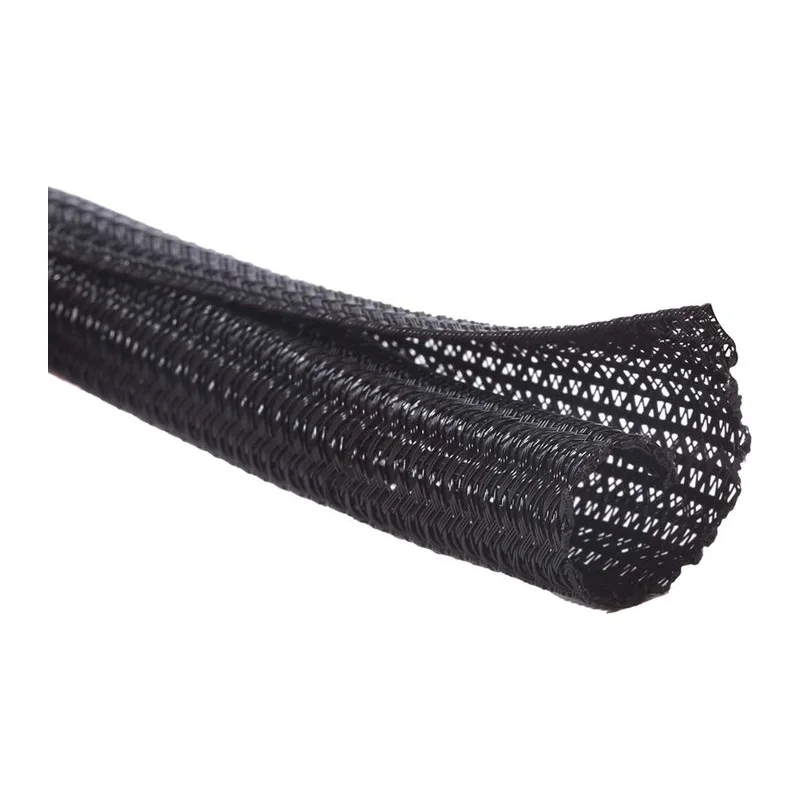
Best for Light Cords
Alex Tech Split Cord Protector, 1/4 Inch
Ten feet of split braided sleeve that you push cords into from the side, so plugs don't have to fit through. The 1/4-inch size suits light and extension cords.
Buy on AmazonCats that chew cords usually go for the loose length running from the tree to the wall. Cats Protection suggests covering those wires with plastic or cardboard tubes, and switching the lights off at the wall when you’re not home.
A split sleeve like the Alex Tech Cord Protector is the tidiest way to do it. It’s split along its length, so you push the cord in from the side without unplugging anything, and it closes back over it. The 1/4-inch size fits light strings and thin extension cords; for thicker cords, the same sleeve comes in 1/2-inch and larger sizes. Run the cord along the wall rather than across the floor, keep spare plugs and outlets behind the tree or a piece of furniture, and wind the lights tightly around the inner branches, where they’re harder to pull at.
If your cat ever chews through a cord, take it to a vet straight away, even if it seems fine.
Make the Base of the Tree Unappealing
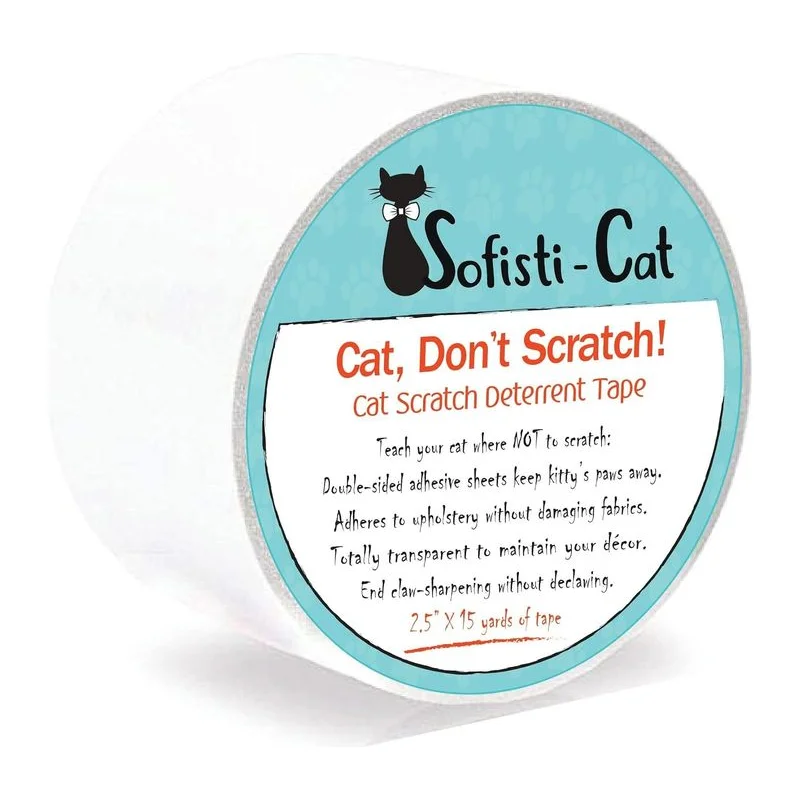
Best Deterrent for the Floor Around the Tree
Sofisti-Cat Training Tape
A 2.5-inch by 15-yard roll of clear double-sided tape. Cats dislike the sticky feel under their paws and soon learn to stay off the surfaces it covers.
Buy on AmazonMost cats hate walking on surfaces that feel strange. PAWS, an animal shelter near Seattle, lists sticky tape, heavy foil and plastic carpet runner laid with the pointed side up among the gentlest deterrents. Around a tree, you could:
- Stick strips of double-sided tape, such as Sofisti-Cat Training Tape, across the top of the tree collar, or onto a sheet of cardboard or plastic laid around the base so it doesn’t touch your floor.
- Lay aluminum foil around the stand or under the tree skirt.
- Put a plastic carpet runner, pointed side up, on the floor around the tree.
Some cats are also put off by citrus smells, so a few fresh orange or lemon peels tucked around the stand may help. Use real peel, not oils. Pet Poison Helpline warns that cats are especially sensitive to essential oils, and citrus oils are among those that can harm them, so don’t spray or diffuse them near the tree.
PAWS adds that deterrents work best alongside a pleasant alternative, which is the next step.
Give Your Cat a Better Place to Climb
Cats climb the tree because they want to climb something. Give them a better option and many will take it. A tall cat tree by a window, ideally in the same room, gives them height, a view and a place to watch the excitement from. See our guides to the best cat trees and the best cat window perches.
Reward your cat with treats or play whenever it uses its own climbing spot, and give it a good play session with a wand toy every day in December. A cat that has already chased, pounced and climbed is far less likely to make its own fun in the Christmas tree.
What About Motion-Activated Sprays?
Motion-activated sprays and alarms are sold for keeping cats off things, but we don’t recommend starting with them. They work by startling the cat, and PAWS warns that a deterrent that is mildly unpleasant for one cat can terrify another, so it advises against surprise methods for fearful cats. They can also go off when you, a child or a guest walk past. Try texture, a tree collar and a better place to climb first.
If Your Cat Eats Something From the Tree
Keep an eye out for vomiting, a lack of appetite, a painful belly, lethargy or straining in the litter box, especially after you find a chewed ornament or missing tinsel. Cats with a swallowed string or ribbon can keep eating and drinking for a while, so don’t wait for them to seem very ill.
If you can see tinsel, ribbon or string coming out of your cat’s mouth or bottom, don’t pull it, because it may be caught further in. Call your vet, or ASPCA Animal Poison Control on (888) 426-4435, straight away. The same goes for anything your cat may have eaten from a lily, holly or mistletoe.
A Cat-Safe Tree in Short
Anchor the tree in a spot your cat can’t jump into, let it stand bare for a few days, then decorate from the top down with unbreakable ornaments low and no tinsel at all. Cover the stand and water, sleeve the cords and switch the lights off when you’re out. Put something your cat dislikes walking on around the base, and something it loves climbing nearby. Most cats soon decide the tree isn’t worth the trouble, and if yours is new to your home, see our checklist of everything you need before adopting a cat.