
You can’t train a cat to stop scratching, and it isn’t fair to try. Your cat is doing something it needs to do, and your sofa happens to be tall, sturdy and in the right place. What you can do is give it something it likes better, right where it already scratches, and make the sofa less appealing until the new habit sticks.
Here’s the short version:
- Buy a tall, stable post. It should be at least 32 inches (81 cm) tall, won’t wobble, and is covered in sisal, like the SmartCat Ultimate.
- Put it right next to the spot your cat is scratching. You can move it later.
- Cover the damaged spot, for example with a clear furniture guard, or a thick blanket.
- Reward your cat every time it uses the post, and try silver vine or catnip on it.
- Don’t punish it, and don’t declaw. Punishment doesn’t work, and declawing is an amputation.
Why Cats Scratch Furniture
Scratching does several jobs at once. International Cat Care lists keeping claws healthy, exercising the muscles of the front legs and spine, and marking territory. The glands between a cat’s pads leave a scent, and the shredded fabric and shed claw husks leave a visible sign. That’s why cats often choose places that matter to them, not hidden corners. They scratch near where they sleep, by doors and windows, and in the rooms where everyone spends time.
It’s also not spite. Cornell’s Feline Health Center says plainly that cats don’t scratch out of spite, and VCA Animal Hospitals calls expecting a cat to stop scratching impractical and unfair. You’re aiming to change where your cat scratches, not whether it does.
You’re also far from alone. In a survey of more than 4,000 owners, 52% said their cat scratched where it shouldn’t, and in a 2022 study of 2,465 US and Canadian owners, furniture made up 85% of the items damaged.
What Makes a Scratching Post Work
Many owners already have a post their cat ignores. In that same 4,000-owner survey, 69% of owners with a scratching problem had a post in the same room. So the features matter:
It’s tall. The post should be as tall as your cat when it’s standing on its hind legs at full stretch. Humane World for Animals says at least 32 inches (81 cm), and a review in the Journal of Feline Medicine and Surgery suggests at least 3 feet (91 cm). In the survey, cats with posts over 3 feet were less likely to scratch elsewhere (55% against 65%).
It doesn’t wobble. A post that moves or tips puts a cat off. Push it yourself before you buy into it. A heavy base helps, and so does putting it against a wall.
It’s covered in sisal rope, or something your cat already likes. Rope was the most-used surface when it was offered in the survey, and cats using rope scratched elsewhere the least (54%, against 63% for carpet). In the 2022 study, giving a cat sisal rope was linked to less unwanted scratching. Cardboard works well too, and is cheap. In a small study of 25 cats, rope and cardboard both drew more interest than sofa fabric. Be wary of carpet: San Francisco SPCA warns that looped carpet can trap claws, and a cat may not learn the difference between a carpeted post and your carpet.
It matches your cat’s style. Look at what your cat is scratching now. The arm of a sofa calls for an upright post. A cat that claws the rug may prefer a flat pad. Kittens and older cats may like softer, angled or flat cardboard, which offers less resistance.
There’s more than one. International Cat Care suggests one per cat plus one extra, in different places. In the 2022 study, providing additional posts was linked to less unwanted scratching. A single post in a spare room won’t do it.
These surveys rely on what owners report, and can’t prove that a post causes the difference, but they point the same way as vets’ advice.
Our Scratching Post Picks

Best Scratching Post
SmartCat Ultimate Scratching Post
A 32-inch (81 cm) post covered in woven sisal on a sturdy 16-inch (41 cm) square base, tall enough for most cats to stretch fully. More than 34,000 ratings on Amazon, averaging 4.7 stars.
Buy on AmazonThe SmartCat Ultimate is the post we’d buy first, and it’s the one in our adoption checklist. It meets the height recommended by Humane World for Animals, its wide base stops it tipping, and its woven sisal surface is tough. It costs more than most posts, but a cheap one that wobbles often ends up ignored. A very large cat may want something taller, such as a sturdy cat tree. In the survey, cats with cat trees scratched elsewhere less than cats with other types of post (55% against 63%).
Cheap Flat Scratchers
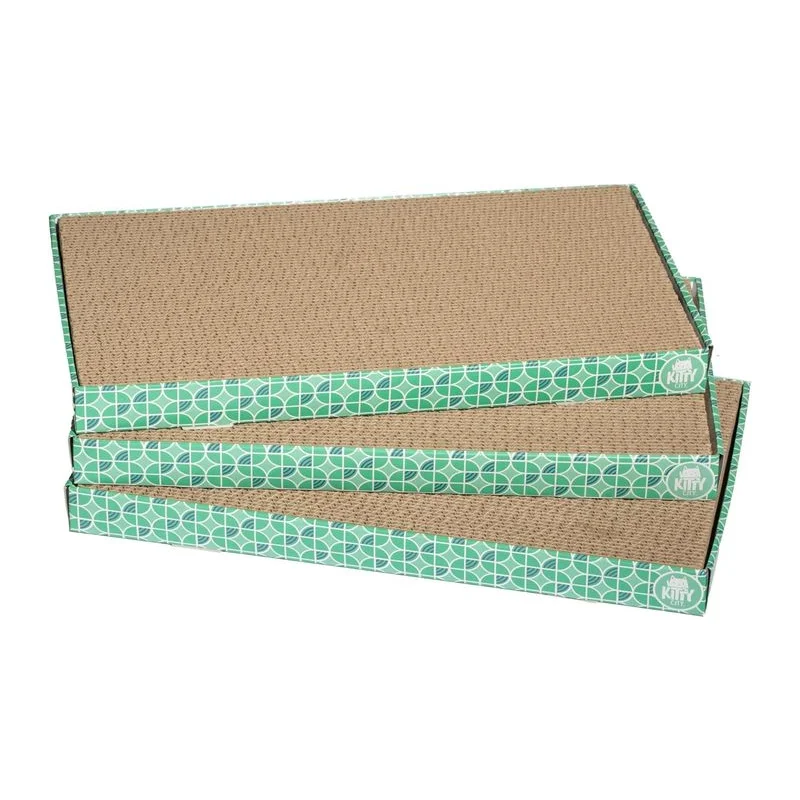
Kitty City XL Cardboard Scratcher Pads
A pack of three 10 by 18 inch (25 by 46 cm) corrugated cardboard pads, usable on both sides. They wear out, but they cost little to replace. More than 21,000 ratings on Amazon, averaging 4.7 stars.
Buy on AmazonFlat pads like the Kitty City XL are a cheap way to find out what your cat likes. They’re also handy for the rug, the bottom of the stairs, or the spot beside the bed. Don’t rely on them alone, as cats need a full stretch and a light pad can slide about. Lean one against a wall, or tape it down, if your cat prefers it steady.
How to Stop a Cat Scratching Your Sofa, Step by Step
- Put the new post right next to the damage. Humane World for Animals says location matters. Place the post against the sofa arm, not in the corner of the room where it looks better.
- Clean the scratched area. Use warm water or a mild cleaner to remove the scent marks that bring your cat back. Test it first on a hidden bit of fabric.
- Cover or block the spot. See the options below. In the 2022 study, restricting access to the unwanted spot was linked to less scratching.
- Make the post interesting. Drag a wand toy up it so your cat digs in its claws. Try catnip or silver vine, and put treats at the base.
- Reward every use. Give a treat or praise as soon as your cat scratches the post. In the 4,000-owner survey, 80% of cats that were rewarded used their post every day, against 68% of those that weren’t.
- Don’t force it. Taking your cat’s paws and dragging them down the post can frighten it and put it off. Humane World says not to.
- Move it slowly, if at all. Once your cat uses the post every time, you can move it. The Indoor Pet Initiative at Ohio State says no more than three inches a day (about 8 cm), and that it’s best to keep it close to where your cat likes to scratch. Take the cover off the sofa only when your cat has stopped trying to scratch there.
No source gives a set time for this. Expect days to weeks, and longer if your cat has been using the sofa for years. Keep the post even when it looks shabby. A shredded post is one your cat loves, and it carries your cat’s scent.
Do Catnip and Silver Vine Help?
They can, if your cat responds. In a study of 100 cats, 79% responded to silver vine and 68% to catnip, and most of the cats that ignored catnip did respond to silver vine. That’s why a mix is a good first try. Most kittens under about 4 months don’t respond at all, so don’t be surprised if nothing happens.

To Get Your Cat Interested
From The Field Catnip & Silver Vine
A tub of catnip mixed with silver vine, made in the USA, which helps with cats that ignore catnip alone. Rub a pinch into the post. More than 8,000 ratings on Amazon.
Buy on AmazonDo Pheromone Sprays Help?
Possibly, but mind the funding. In a 28-day trial of 1,060 cats, scratching became less frequent for 84% of cats with a Feliway Classic diffuser and 69% with a placebo, so many improved either way. The study was funded by the maker, and owners did the reporting. A pheromone product made for posts, Feliscratch, had small positive results in a short test of 19 cats, but we couldn’t find it for sale in the US. If you try Feliway Classic, use it on the furniture or in the room, not on the post, as it’s meant to discourage marking there.
How to Protect Your Furniture
You need to protect the spot while your cat learns. Sources disagree about what’s best, and in the 2022 study, deterrents such as tape, foil and spray showed no link either way with unwanted scratching. So treat them as a stopgap, not a cure.
Clear Couch Guards
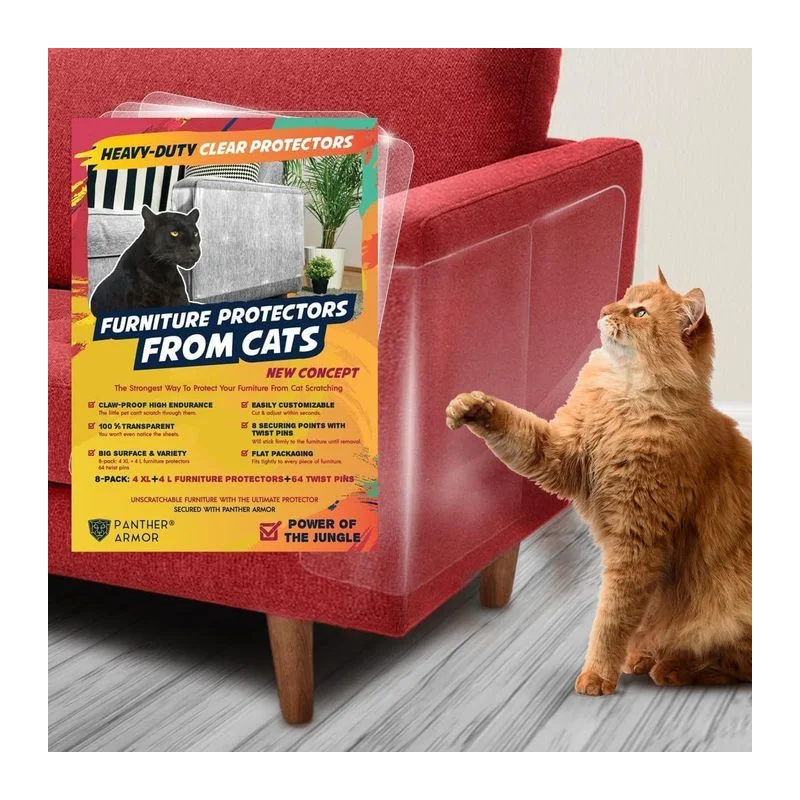
Panther Armor Furniture Protector
Eight clear plastic sheets, up to 12 by 17 inches (30 by 43 cm), that stick to a sofa's arms and corners, with twist pins to hold them. More than 12,000 ratings on Amazon, averaging 4.4 stars.
Buy on Amazon- Plastic guards. Clear sheets like Panther Armor are hard to notice, and the Feline Veterinary Medical Association suggests plastic sofa protectors. Test the adhesive on a hidden area first.
- Double-sided tape. This is a long-standing recommendation from the ASPCA, VCA and others. But the Feline Veterinary Medical Association’s 2026 toolkit says not to use it as a deterrent. If you try it, follow the maker’s fabric advice and take it off once your cat has moved on. We’d start with a guard instead.
- Blankets and sheets. International Cat Care suggests a thick blanket, and Humane World a tight-fitting sheet. They’re free, if not pretty.
- Closing a door. If it’s practical, simply keep your cat out of the room while it’s learning.
What we’d skip. A 2019 review says that foil and carpet runners may only move the scratching elsewhere, and doesn’t recommend commercial sprays meant to repel cats. Be careful with citrus sprays too, which PetMD and others suggest: test them on a hidden bit of fabric, and keep them well away from the post, or you may put your cat off that as well. PetMD also warns that loud or prolonged noises can make a cat more fearful, so we wouldn’t use motion-activated alarms or sprays.
What about choosing a cat-proof sofa? We found no veterinary research on which upholstery cats scratch least. Pet and furniture sites often recommend tightly woven fabrics, and avoid loose or looped weaves that a claw can hook, which fits how cats scratch. Treat that as sensible advice, not a guarantee.
Don’t Punish Your Cat
Shouting, spraying water or tapping your cat doesn’t help. In the 2022 study, owners who used verbal or physical correction reported more unwanted scratching, though it’s possible that they were simply responding to more scratching. A smaller survey found punishment was common and didn’t seem to change how often cats scratched. It can also make a cat afraid of you, and fear can lead to more scratching.
If you catch your cat at the sofa, stay calm. Wiggle a toy to draw it to the post, and reward it when it scratches there.
Do Nail Trims or Caps Help?
Trims blunt the claws, so they do less damage, but they won’t stop your cat from scratching. International Cat Care says trimming doesn’t meet your cat’s needs, which is why it isn’t the fix by itself. Our guide explains how to trim a cat’s nails.
Nail caps divide opinion. The Feline Veterinary Medical Association lists them as an alternative to declawing, reapplied every four to six weeks. UK charities disagree: Cats Protection says never to cover claws, because it stops them retracting and can cause stress and pain. In the 2022 study, neither trims nor caps were linked to less unwanted scratching. Our nail guide covers the arguments.
Why You Shouldn’t Declaw
Declawing isn’t a manicure. It removes the last bone of each toe. The Feline Veterinary Medical Association strongly opposes it, citing acute and chronic pain and behavior changes, and International Cat Care calls it an unethical mutilation.
In a study of 137 declawed cats and 137 others, declawed cats had higher odds of back pain (2.9 times), biting (4.5 times) and toileting outside the box (7.2 times). The study can’t prove cause, but it’s hardly reassuring: you may swap scratched furniture for bites and soiled carpets.
It’s also illegal in many places. The UK prohibits it, as do eight Canadian provinces, and by 2026 US states with bans included New York, Maryland, Massachusetts and California. And bans don’t seem to fill shelters: after British Columbia’s 2018 ban, a study of 74,587 shelter cats found no increase in cats given up for scratching.
When Scratching Is a Sign of Stress
Sometimes the problem isn’t the post. Look at the pattern:
- Scratching all over the house, especially by doors and windows, suggests your cat feels insecure.
- A sudden increase can follow a new pet, a move, a change of routine or building work. The Feline Veterinary Medical Association treats increased scratching as a possible sign of distress.
- Tension with another cat can be easy to miss. Give each cat its own resources, spread around your home. See our guide on how to introduce cats if it’s a recent arrival.
- New furniture only is often just marking, and tends to fade, according to VCA.
Talk to your vet if the scratching suddenly gets worse, keeps going despite your efforts, or comes with changes in appetite, litter box use or social behavior. A cat in pain may also change how it scratches, and thick, overgrown claws can point to arthritis or an overactive thyroid.
Scratching Carpets, Doors and Walls
The same method works anywhere: put a suitable scratcher at the spot, and make the spot less appealing.
- Carpets and stairs. Try a flat cardboard or sisal pad on the floor nearby. Stair-scratchers often like the bottom step.
- Doors and door frames. Stand a tall post beside the door. A panel on the door or wall can help if space is tight, although in the survey, cats with wall-mounted scratchers scratched elsewhere the most (74%), so try a sturdy floor post first.
- Walls and wallpaper. Match the height and texture your cat is using. International Cat Care suggests a vertical surface with a similar texture.
Start Early With a Kitten
Kittens start scratching at about five weeks old, according to International Cat Care. Put a post or a cardboard scratcher where your kitten plays and naps from the first day, and reward it for using them. Kittens outgrow small posts fast, so buy a taller one as yours grows. In a small study of kittens at about 8 weeks old, S-shaped cardboard was far more popular than a rope post, so cardboard is a good first choice. Our adoption checklist covers the rest of what a new kitten needs.
Stopping Furniture Scratching in Short
Your cat needs to scratch, so give it a better option. Put a tall, stable sisal post right next to the sofa, protect the damaged area with a guard, and reward your cat every time it uses the post. Try silver vine or catnip if it isn’t interested, add more posts where your cat spends time, and move a post only slowly, once the habit is set. Skip punishment and declawing, and see your vet if the scratching comes on suddenly or seems to be caused by stress.