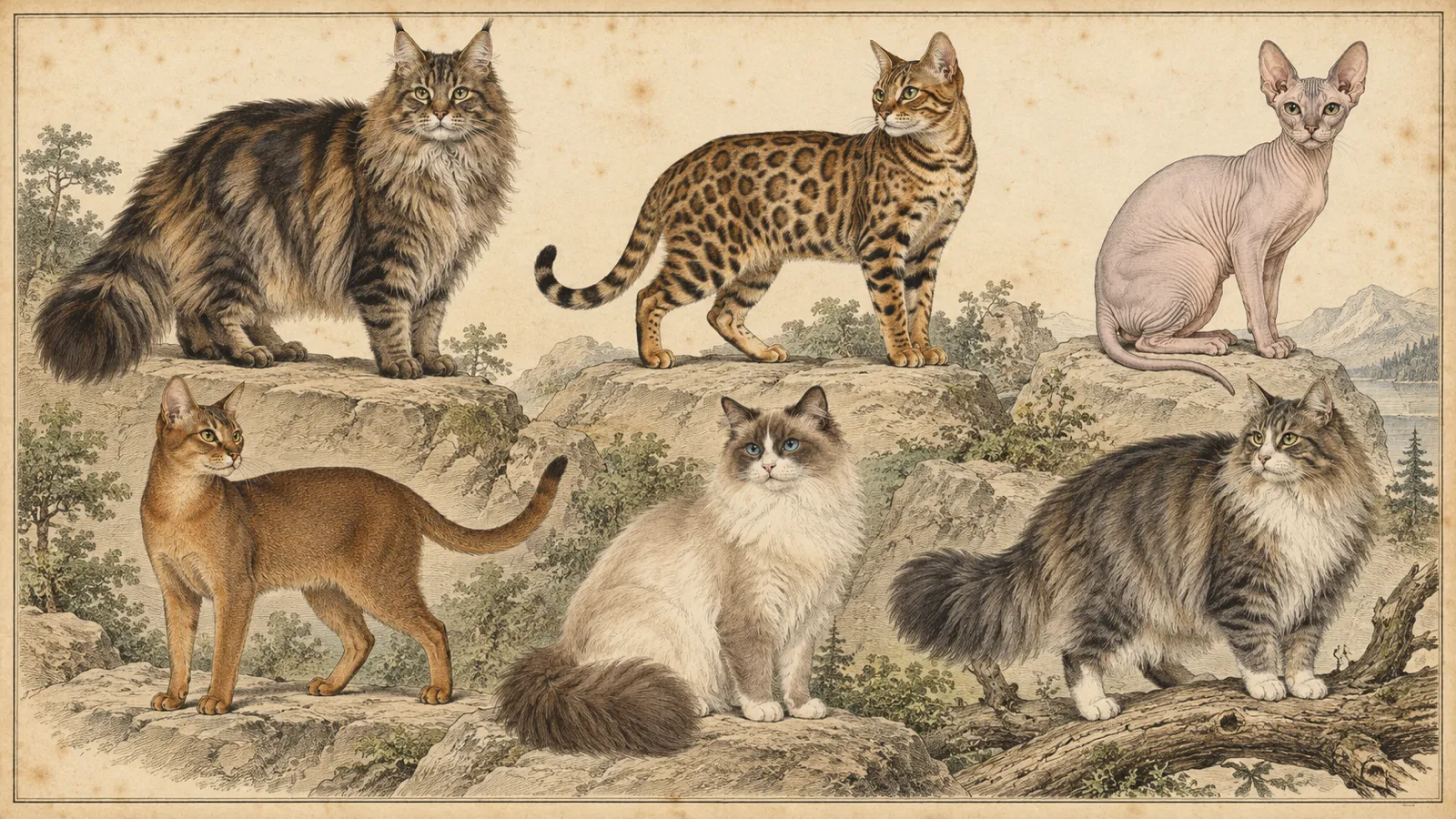
Most cat cafés in Europe and North America work with rescues, so the cats you meet are usually mixed-breed moggies waiting for a home. In East and Southeast Asia it is often the other way round. Many cafés there keep resident pedigree cats, and the biggest chains are built around them: a single room can hold a Maine Coon, a Scottish Fold, a Bengal and a hairless Sphynx.
If you have always wanted to sit next to a ten-kilo Maine Coon or see what a Ragdoll is like in person, these are the places to go. They work differently from rescue cafés, though. The cats live there and are not up for adoption, some cafés are run by breeders who sell kittens, and a few of the most popular breeds come with real health problems. We cover those at the end. We checked every café below in October 2026.
Pedigree Cat Cafés at a Glance
Café | City | Breeds to look for | Price |
|---|---|---|---|
Cat Cafe MOCHA | Tokyo and across Japan | Around 18 breeds per shop, from Munchkins to Siberians | ¥297 per 10 minutes (weekdays, Shibuya) |
Neko JaLaLa | Tokyo (Akihabara) | Maine Coons, Abyssinians, American Curls | ¥750 per 30 minutes plus a drink (weekdays) |
Cat Café MOFF | Honolulu | Scottish Folds, Ragdolls, Maine Coons, Russian Blues, Siberians | $23 for 30 minutes, $28 for an hour, with a drink |
Maison Maine Coon | Milan | Maine Coons only | Free entry; you pay for food |
Maine Coon Manor | Kissimmee, near Orlando | Maine Coons, plus Scottish Folds, Sphynx and a Bengal | $21.50 for 55 minutes |
Red Moon | Taipei | Maine Coons, Ragdolls, a Devon Rex | Minimum spend of about NT$400 |
DCAT | Seoul (Sinchon) | Ragdolls only | One ticket with a self-serve drink |
CATFE | Ho Chi Minh City | Maine Coons, Munchkins, British Shorthairs, Sphynx, Bengals | 109,000 VND, no time limit, snacks and drinks included |
Cat Cafe MOCHA
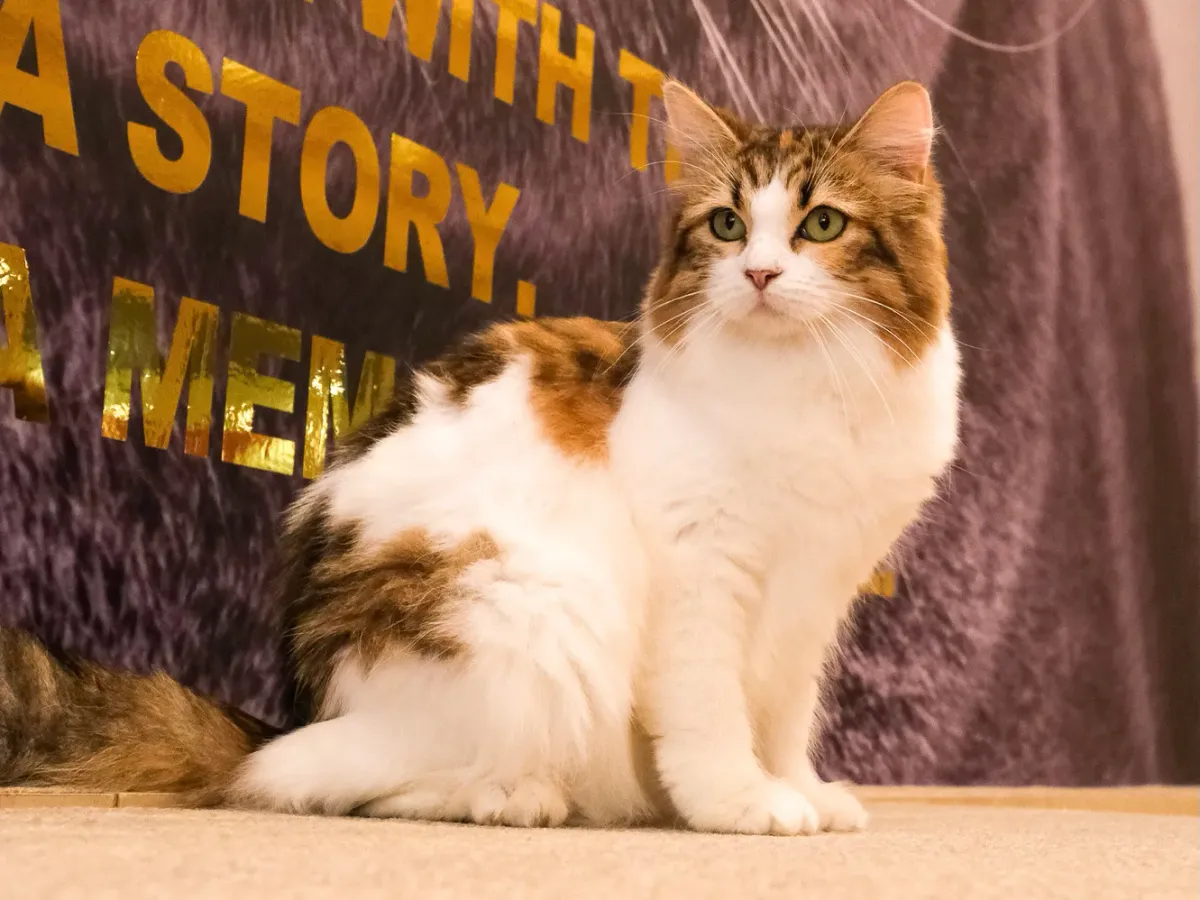 Cat Cafe Mocha Okayama, courtesy of @mocha.okayama on Instagram
Cat Cafe MOCHA is the easiest way to meet a lot of breeds in one visit. The Japanese chain has 42 cafés on our map, most of them in Japan, with branches in Seoul, Taipei and Vietnam. It keeps more than 700 cats across its shops, about 20 per café, and vets visit the shops.
The Shibuya branch, five minutes from the Hachiko exit of Shibuya station, is typical. Its 25 or so cats cover around 18 breeds: Munchkins, Scottish Folds, Siberians, Ragamuffins, Persians, Norwegian Forest Cats, Maine Coons, a Somali, Cornish and Devon Rexes and more. It costs ¥297 per 10 minutes on weekdays and ¥385 at weekends and on holidays, with a daily cap, and treats cost ¥550. There are no reservations. Children aged 3 and up are welcome, and elementary-school children need a guardian. It is open every day from 10am to 8pm.
Mocha cats are residents, not adoptees, but they don’t stay forever. When cats retire, the chain finds them adoptive homes and lists the cats that are leaving on its graduation page.
Neko JaLaLa
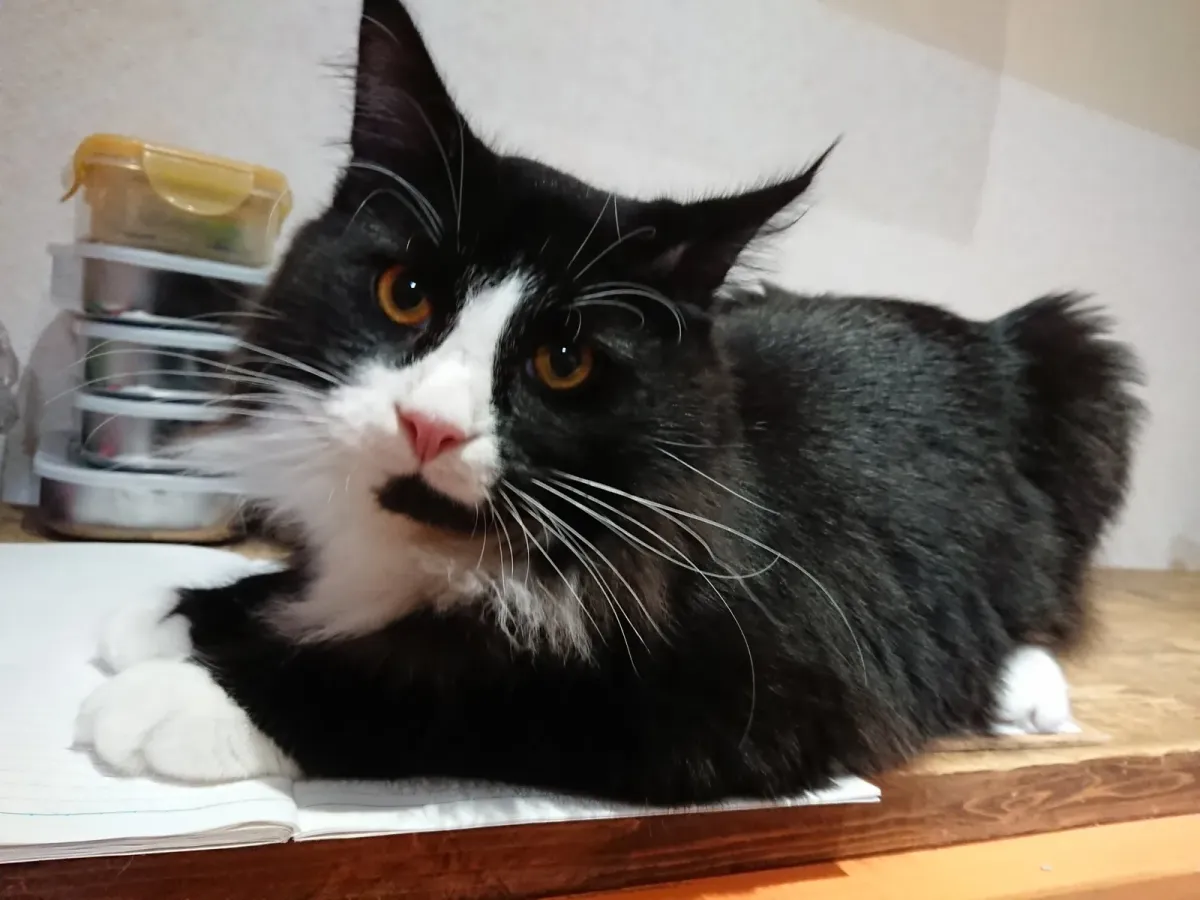 Courtesy of @nekojalala on X
Neko JaLaLa is a small, long-running café in Sotokanda, five minutes from Suehirocho station and about ten from Akihabara. It is best known for its Maine Coons, including a “signboard cat” of more than 10 kilos, and also keeps Abyssinians, American Curls and long-haired cats. The room is cosy and fits only a few groups at a time, and coloured collars mark the cats who would rather be left alone.
Weekdays cost ¥750 per 30 minutes. At weekends and on holidays the first hour is ¥1,700, then ¥850 per 30 minutes. Everyone orders a drink. It is open every day from noon to 8pm. The café’s Instagram says it takes cash only, so bring yen.
Cat Café MOFF Waikiki
Cat Café MOFF at the International Market Place in Waikiki is the first American branch of a Japanese chain with more than 30 cafés, and it opened in September 2023. Its 20 or so cats came over from Japan and include Scottish Folds, Ragdolls, Maine Coons, Russian Blues, Minuets, Ragamuffins and Siberians. They live at the café for good and are not sold or adopted out.
A visit costs $23 for 30 minutes or $28 for an hour, with a drink included, and Hawaii residents and the military get 10% off. You can walk in or book online, and everyone signs a waiver. It is open every day from 10am to 8pm, with last entry at 7:30pm.
Maison Maine Coon
Maison Maine Coon on Via Spartaco in Milan, between Porta Romana and Porta Vittoria, is a café and restaurant built around ten Maine Coons who belong to the founder, Federica. Entry is free, and you pay for what you eat. It serves breakfast, lunch and dinner, brunch at weekends and an aperitivo on Sundays.
It is open from 9am to 11pm Tuesday to Saturday and from 10am to 8pm on Sunday, and closed on Monday. Book a table on the café’s website, especially at weekends, when children under 12 are not allowed.
Maine Coon Manor
Maine Coon Manor in Kissimmee, south of Orlando, opened in February 2026 with a dozen or so resident cats, mostly Maine Coons, plus Scottish Folds, Sphynx and a Bengal. The residents are not for adoption or sale. What makes it unusual is the second room: an adoption room run with Cat Haven Rescue, with around 15 cats who are looking for homes, for a $125 adoption fee.
Sessions last 55 minutes and cost $21.50 including tax. Book ahead on the café’s website, because same-day tickets are not guaranteed. Everyone aged 3 and up needs a ticket, under-16s must come with an adult, and each adult can bring at most two children under 12. It is closed on Mondays. Our Orlando guide has more on it and on the city’s other cat cafés.
Red Moon
Red Moon on Chifeng Street in Taipei, between Zhongshan and Shuanglian MRT stations, calls itself a Maine Coon gallery. More than ten Maine Coons live there, along with two Ragdolls and a Devon Rex. It is a floor-seating café with room for only four groups at a time, so book ahead.
There is a minimum spend of about NT$400 per person, children included, plus a 10% service charge, and visits run to about 90 minutes. Children must be 6 or older. It is open from 1pm to 9pm.
Ragdoll Cat Cafe DCAT
DCAT in Sinchon, Seoul, keeps only Ragdolls, the big, blue-eyed breed known for going floppy when picked up. It is a short walk from exit 1 of Sinchon station, past the Hyundai Department Store. Your ticket includes a self-serve drink and snack bar, and children under 13 need a guardian. It is open every day, from 1pm to 9pm on weekdays and noon to 10pm at weekends.
CATFE
CATFE has been running cat cafés in Ho Chi Minh City since 2016, and three are open: in Aeon Mall Tân Phú, in Aeon Mall Bình Tân and at Estella Place. Its original District 1 flagship has closed. The Tân Phú café has about 23 cats, including Maine Coons, short-legged Munchkins and Napoleons, British Shorthairs and Longhairs, Scottish Folds, two Sphynx and three Bengals. Coloured collars show each cat’s age group and which ones are more sensitive.
Entry is 109,000 VND with no time limit and a free buffet of snacks and soft drinks; Estella charges 119,000 VND at weekends. The cafés are open from 10am to 9:30pm.
Servals and Savannahs
A few cafés go beyond domestic breeds. Cafe Surin in Nanjo, in the south of Okinawa, is a farm-to-table restaurant where you can see servals, a wild African cat, from your table. You watch them, but you don’t touch them.
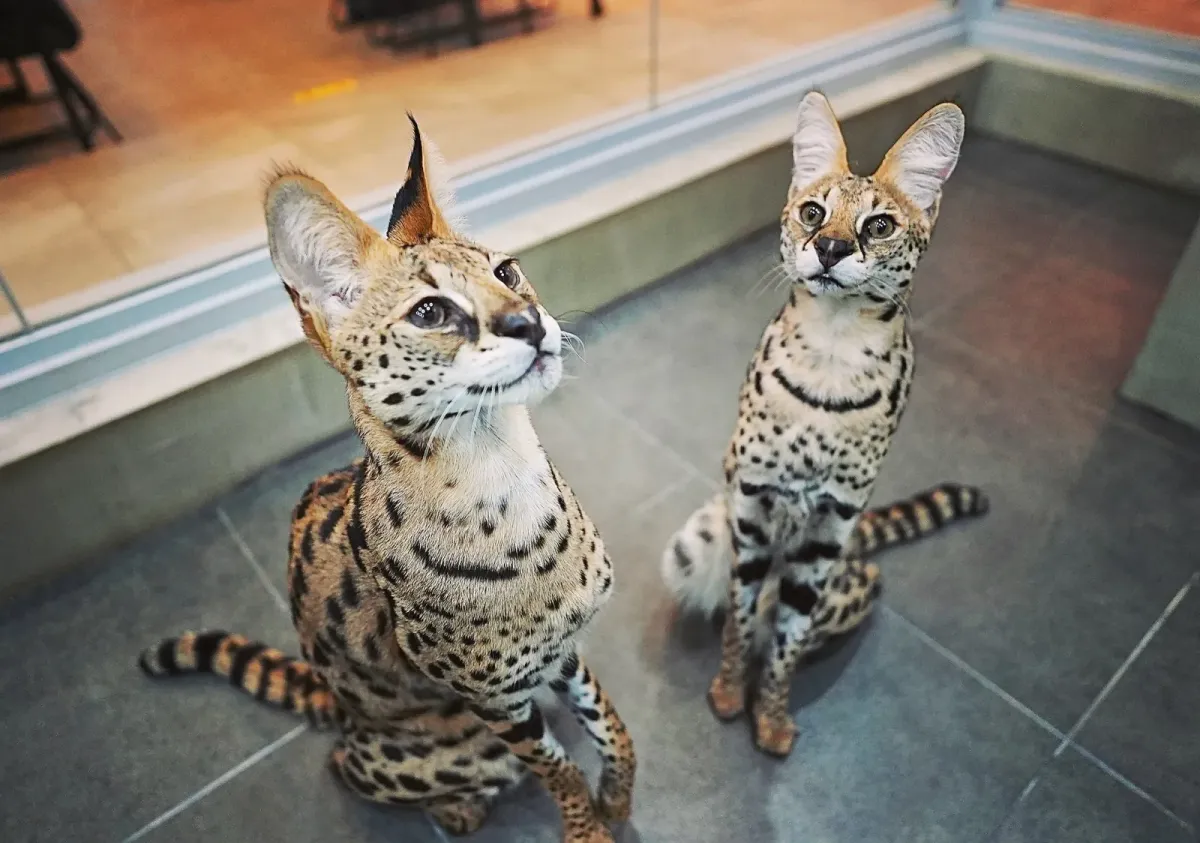 Courtesy of @cafe_surin on Instagram
That distance matters. In Japan the serval is a specified animal, the category for animals that can seriously injure people, and keeping one needs a permit; since 2020 they can no longer be kept as pets. Born Free advises against keeping servals as pets or using them in meet-and-greets. Be wary of anywhere that lets you hold a wild cat.
Savannahs, a cross between servals and domestic cats, turn up at a handful of cafés on our map, including Cat Cafe LIPMY in Tokyo and You Meow in Newcastle. Later generations are much closer to a house cat, but International Cat Care does not support breeding hybrids, because of the welfare problems for the domestic mothers and the early crosses.
What to Know About Breed Health
Some of the breeds you will see most often at these cafés have health problems built into their looks.
- Scottish Folds. The folded ears come from a gene variant that also affects cartilage and bone, causing a painful joint condition called osteochondrodysplasia. How badly it affects each cat varies, but RSPCA Australia considers breeding them unethical.
- Munchkins. The short legs come from a form of dwarfism, with concerns about mobility and arthritis. In 2024 The Cat Group, which includes International Cat Care, came out against breeding newer Munchkin and Sphynx crosses.
- Sphynx. Hairless cats feel the cold and need regular bathing. The Netherlands banned breeding Scottish Folds and hairless cats in 2014, and from 2026 it no longer allows new ownership of Folds and Sphynx born after the ban.
None of this means you should skip these cafés. The cats are usually well cared for, and staff can tell you about each one. But if a visit leaves you wanting a Fold or a Munchkin of your own, read up first. In Taiwan, Korea and Thailand, some breed cafés are run by catteries, and the kittens in the window are for sale.
Prefer to Adopt?
Pedigree cafés rarely rehome their cats. In our directory, only a small share of cafés that mention a pedigree breed also offer adoption, while 40% of all open cafés do. If you want a cat of your own, an adoption café is the better place to start.
You can find adoption cafés near you on the map, and our adoption checklist covers what to have ready before your cat comes home.
Closed Cafés
Two cafés from earlier versions of this article have closed. Bengal Brew in Quezon City, which kept Bengals alongside a dog café, has shut for good, and so has CATFE’s original flagship on Nguyen Thi Minh Khai Street in Ho Chi Minh City. Y Cat Cafe in Hongdae, Seoul, is still open but now keeps rescued and senior cats rather than pedigrees.